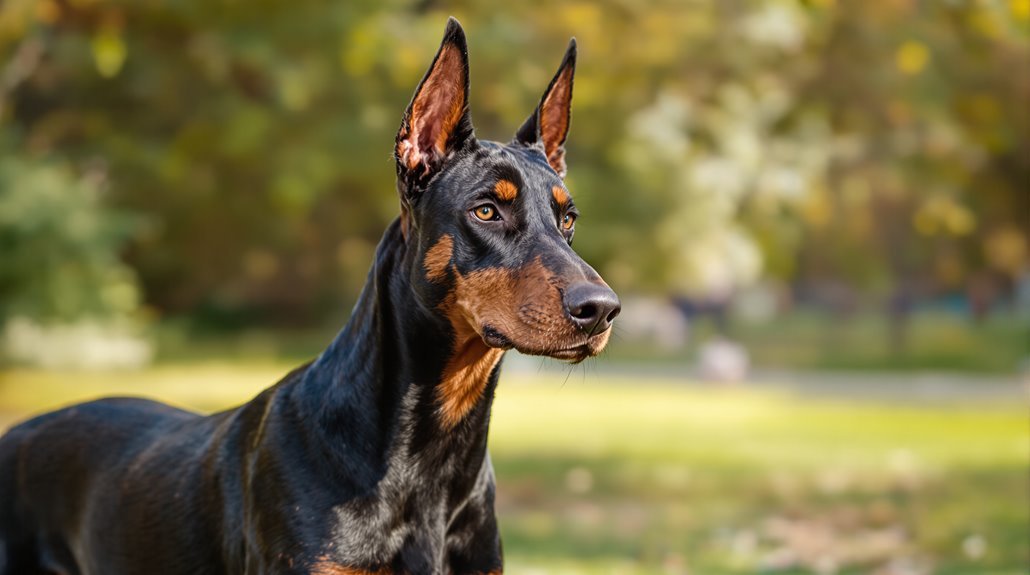
When I think about Doberman dogs, I see loyal, intelligent companions rather than the aggressive creatures many believe them to be. Their protective nature can sometimes be mistaken for hostility, but with proper training and socialization, they become loving family members. Establishing a strong bond through play and consistent training makes all the difference. There’s so much more to discover about these wonderful dogs and their incredible temperament and training needs.
Understanding Doberman Temperament: Myths vs. Reality

How well do you really know Doberman temperament? When I first encountered these dogs, I was surprised by their calming energy. Many people think Dobermans are aggressive, but that’s far from the truth. In reality, they’re intelligent, loyal, and protective. Their temperament often shines during social introductions.
I’ve seen how they can adapt quickly to new environments, displaying both confidence and friendliness. It’s crucial to understand that their behavior largely depends on socialization and training from an early age. If you treat them with respect and love, they respond positively.
Debunking Common Myths About Doberman Temperament

What misconceptions have you heard about Doberman temperament? Many people believe these dogs are aggressive or overly dominant, but that’s just a myth vs reality situation. In truth, Dobermans are known for their loyalty, intelligence, and affectionate nature. Temperament myths often stem from their protective instincts, which can be mistaken for hostility. When properly socialized and trained, they’re gentle family members who thrive on companionship. I’ve experienced firsthand how a Doberman’s temperament can be nurturing and calm. They need guidance and positive reinforcement to flourish, just like any breed. So, let’s debunk these myths together and appreciate the true, loving nature of Dobermans that often gets overshadowed by misconceptions.
Essential Training Techniques for Your Doberman

When it comes to training your Doberman, where do you start? I recommend establishing consistent training routines right from the beginning. Focus on basic commands like sit, stay, and come; they form the foundation of good behavior. Be patient and use positive reinforcement—treats and praise work wonders!
Incorporating structured exercise schedules is equally important. Dobermans are energetic dogs that thrive on physical activity. Daily walks, play sessions, or agility training not only keep them fit but also enhance their focus during training.
Make sure to keep sessions short and engaging, ideally around 10-15 minutes, to maintain their attention. Before you know it, your Doberman will be well-trained and ready to impress!
Building a Strong Bond With Your Doberman
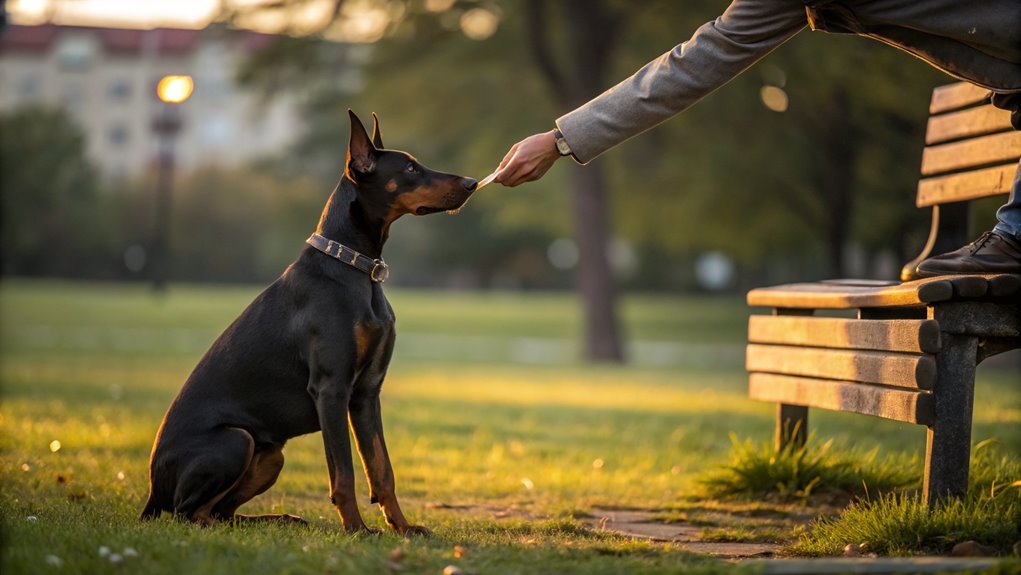
Why is building a strong bond with your Doberman so essential? This connection fosters trust and loyalty, making training smoother and more enjoyable. I’ve found that engaging in bonding activities, like regular play sessions or long walks, helps strengthen our relationship. These moments allow us to share experiences and reinforce our bond.
Paying attention to communication cues is equally important. I’ve learned to recognize my Doberman’s signals, whether it’s a wagging tail or a curious tilt of the head. Responding to these cues builds mutual understanding and respect. As our bond deepens, I see my Doberman grow more confident and responsive, creating a harmonious partnership that enhances our lives together.
The Benefits of Owning a Doberman Beyond Guarding

Have you ever considered how much more a Doberman can offer beyond its reputation as a fierce guard dog?
These dogs are incredibly loyal companions, always ready to stand by your side through thick and thin.
Their intelligence and eagerners to please make training a rewarding experience, and they thrive on bonding with their families.
You might be surprised to learn that Dobermans are also fantastic with children.
Their gentle nature allows for family-friendly interactions, ensuring everyone feels safe and loved.
Plus, their playful spirit adds a zest to daily life.
Owning a Doberman means having a devoted friend who’s not just a protector but also a beloved family member, enriching your life in countless ways.
Frequently Asked Questions
How Much Exercise Does a Doberman Need Daily?
A Doberman needs about 60 to 90 minutes of exercise daily. I make sure to incorporate walks, playtime, and training sessions into my routines, keeping them engaged and happy while meeting their exercise needs.
Are Dobermans Good With Children?
Absolutely, Dobermans can be great with children! With proper training and obedience, I’ve seen them thrive in family settings. Just ensure child safety by supervising their interactions and teaching kids how to respect the dog.
What Health Issues Are Common in Dobermans?
Dobermans often face health issues like dilated cardiomyopathy and hip dysplasia, influenced by their genetics. I’ve learned that ignoring longevity myths can lead to better care and improved health outcomes for my furry friend.
How Long Do Dobermans Typically Live?
Dobermans typically live around 10 to 12 years. I’ve learned that factors like breeding and health play significant roles in their longevity. Don’t believe the myths; proper care can really enhance a Doberman’s lifespan.
Can Dobermans Be Left Alone for Long Periods?
I wouldn’t leave my Doberman alone for long periods. Their housing layout needs space, and I always provide enrichment ideas like toys and puzzles to keep them engaged. It helps prevent boredom and anxiety.
Conclusion
In conclusion, owning a Doberman can be an incredibly rewarding experience. By understanding their true temperament and debunking common myths, you can appreciate these loyal and intelligent dogs even more. With the right training techniques and a strong bond, your Doberman can become a cherished family member, offering companionship beyond their guarding instincts. So, if you’re considering welcoming one into your life, know that you’re gaining a devoted friend and protector.