
If you’re searching for the best flea repellents for cats, the first thing to know is that many vet-recommended products don’t technically “repel” fleas in the way mosquito spray repels bugs from people. Instead, most modern cat flea products prevent infestations by killing fleas quickly or interrupting the flea life cycle. That distinction matters, because the safest and most effective option for your cat is usually a cat-specific preventive or treatment, not a random “natural repellent” from the internet. Source
Fleas are more than a nuisance. They can trigger severe itching, flea allergy dermatitis, anemia in kittens, and even spread tapeworms and infectious agents. Cornell’s feline health experts also note that a single female flea can lead to a massive infestation in a surprisingly short time, which is why early prevention matters so much. Source
Image: topical application example from Great Pet Care.
1. Topical Spot-On Flea Preventives
For many cat owners, topical spot-on treatments are the go-to choice. These products are applied to the skin, usually between the shoulder blades, and may contain ingredients such as selamectin, fipronil, or imidacloprid, depending on the product. They’re popular because they’re easy to use, often work for a full month or longer, and can help control not only adult fleas but sometimes other parasites too. Source
A strong reason these products are so widely recommended is their evidence base. In one review of flea control in cats, topical selamectin was reported to eliminate more than 98% of fleas within 24 hours and also significantly reduce egg hatching and larval development for 30 days. That makes spot-ons one of the strongest choices for households dealing with active flea pressure. Source
From an SEO and user-intent perspective, this is often the answer people are really looking for when they search “best flea repellent for cats”: a monthly topical preventive prescribed or recommended by a veterinarian. Just make sure the product is specifically labeled for cats, your cat’s weight, and the correct life stage. Source
2. Oral Flea Medications for Cats
If you want something that acts fast, oral flea medications can be a useful option. Veterinary sources describe oral agents such as nitenpyram and other adulticides as part of the flea-control arsenal for cats. These are often used when a cat already has fleas and needs rapid knockdown, though the exact products available can vary by market and veterinary recommendation. Source
Oral options can be especially helpful when you need to kill adult fleas quickly, but they are not always the best stand-alone long-term solution. In many cases, vets pair fast-acting oral treatment with environmental cleanup or a longer-acting preventive. If your cat is difficult to medicate, a spot-on may still be the easier route. Source
3. Flea Collars for Long-Lasting Protection
Flea collars remain a common option for cat flea prevention because they’re convenient and long-lasting. Cornell notes that long-acting collars are among the routine options used for flea control in pets, and the FDA lists collars as one of the major flea-and-tick product formats on the market. Source Source
That said, collars deserve a little extra caution. The EPA’s review of Seresto collars found that the product continues to meet EPA standards, but it also required new label warnings, improved incident reporting, and instructions to remove the collar if adverse effects occur. If you choose a flea collar for your cat, monitor closely for itching, hair changes around the neck, or neurologic signs, and remove the collar right away if a reaction appears. Source
Image: flea collar example from Walmart.
4. Flea Sprays for Cats and the Home
Flea sprays can help, but it’s important to separate pet sprays from home sprays. Some sprays are formulated for direct use on cats, while others are only meant for carpets, bedding, furniture, and cracks where fleas and larvae collect. The FDA specifically warns pet owners to use products only as directed and never apply a household or yard product directly to the animal. Source
This category matters because flea control is rarely just about the cat. Merck explains that even with effective treatment on the pet, a home infestation can continue for 2 to 3 months because of the flea life cycle. Washing bedding, vacuuming thoroughly, and treating the environment when needed can be essential to finally breaking the cycle. Source
5. Flea Shampoos, Dips, and Powders
Shampoos, dips, and powders still exist, and the FDA lists them among the common flea product forms available to pet owners. These products may help reduce fleas on the cat’s body, but they’re usually less convenient than modern spot-ons or long-acting preventives, especially for cats that hate baths. Source
Cornell also notes that powders and topical anti-flea products have long been used as part of treatment, but emphasizes that all such products should be used carefully and ideally with veterinary guidance. In practice, these are often supportive tools rather than the first choice for long-term flea prevention. Source
6. Flea Combs as a Chemical-Free Helper
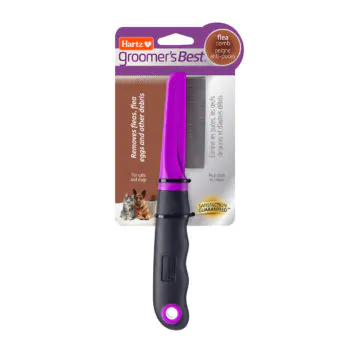
A flea comb is not enough on its own for a serious infestation, but it’s still one of the most useful low-risk tools cat owners can keep around. The FDA specifically recommends flea combs for puppies and kittens too young for flea products, and they’re also useful for checking whether treatment is working or for removing live fleas and flea dirt during grooming. Source
For cats that react poorly to topical products, or for owners who want a way to monitor fleas without adding more chemicals, flea combing is a practical add-on. It’s also a simple way to inspect high-risk areas like the neck, lower back, and base of the tail. Source
Image: flea comb example from Hartz.
What to Avoid When Choosing Flea Repellents for Cats
The biggest mistake cat owners make is assuming that if a product is safe for dogs, it must be safe for cats. That is not true. The FDA says clearly: if the product is for dogs, don’t use it on cats, and always match the product to the species, age, and weight listed on the label. Source
It’s also wise to be skeptical of “natural” flea repellents made with essential oils. The ASPCA warns that concentrated essential oils can be dangerous to cats, especially when applied directly to the coat or skin. Cats exposed to concentrated oils may develop unsteadiness, depression, low body temperature, vomiting, or diarrhea. For that reason, “natural” does not automatically mean “safe” for feline flea control. Source
Which Flea Repellent Is Best for Cats?
For most cats, the best answer is a vet-recommended topical preventive or other cat-specific product chosen for your pet’s age, weight, health status, and lifestyle. If your cat already has fleas, you may need a combination approach: a fast-acting treatment for the cat, careful vacuuming, washing bedding, and possibly an environmental product for the home. Merck and Cornell both stress that without addressing the environment, flea problems often return. Source Source
Final Thoughts
The best flea repellents for cats are usually not gimmicky sprays or homemade hacks. They’re cat-specific, evidence-based flea preventives and treatments used correctly and paired with environmental cleanup when needed. If you want the safest route, talk to your veterinarian before choosing between a spot-on, oral medication, collar, spray, or other treatment—especially if your cat is elderly, sick, pregnant, nursing, or very young. Source
SEO FAQ
What is the safest flea repellent for cats?
In many cases, the safest option is a veterinarian-recommended product made specifically for cats, such as a properly dosed topical preventive. The FDA recommends matching the product to species, weight, and life stage and consulting a veterinarian if your cat has health issues. Source
Can I use dog flea treatment on my cat?
No. Dog flea products should not be used on cats unless the label explicitly says so. The FDA warns against using a dog product on a cat because species differences can make this dangerous. Source
Do natural flea repellents work for cats?
Some “natural” products may sound appealing, but safety is a major issue. The ASPCA warns that concentrated essential oils can be harmful to cats, especially if applied directly to the body. Source
Why do fleas keep coming back after treatment?
Because fleas live not only on the cat, but also in bedding, carpets, cracks, and shaded outdoor areas. Merck notes that full household control can take 2 to 3 months due to the flea life cycle. Source
If you want, I can also turn this into a more polished affiliate-style roundup, a shorter blog version for WordPress, or a fully optimized article with intro, conclusion, schema FAQ, and internal-link suggestions.