Mastiffs are truly gentle giants, and caring for them involves understanding their calm temperament and body language. They thrive on high-quality nutrition, balanced exercise, and consistent grooming. Regular walks and gentle play keep them active without risking injury. Socializing them in varied environments fosters confidence and happiness. I’ve found that positive reinforcement works wonders. If you’re keen to provide the best for your Mastiff, I’ve got more tips to guarantee they flourish in your home.
Understanding Your Mastiff’s Temperament and Behavior

Have you ever wondered what makes Mastiffs such gentle giants? Their temperament is truly fascinating. Understanding their behavior cues is key to building a strong bond. Mastiffs are known for their calm demeanor, but they communicate through subtle body language. When I observe my Mastiff, I pay attention to his posture and tail movements; they often reveal how he feels.
Training should match their pace—slow and steady works best. Consistency and patience are essential. I’ve learned that using positive reinforcement helps my Mastiff feel secure and confident. By recognizing his unique signals, I can respond appropriately, ensuring he knows he’s loved. This understanding transforms our relationship, making every moment together more enjoyable and rewarding.
Choosing the Best Nutrition for Your Mastiff’s Unique Needs
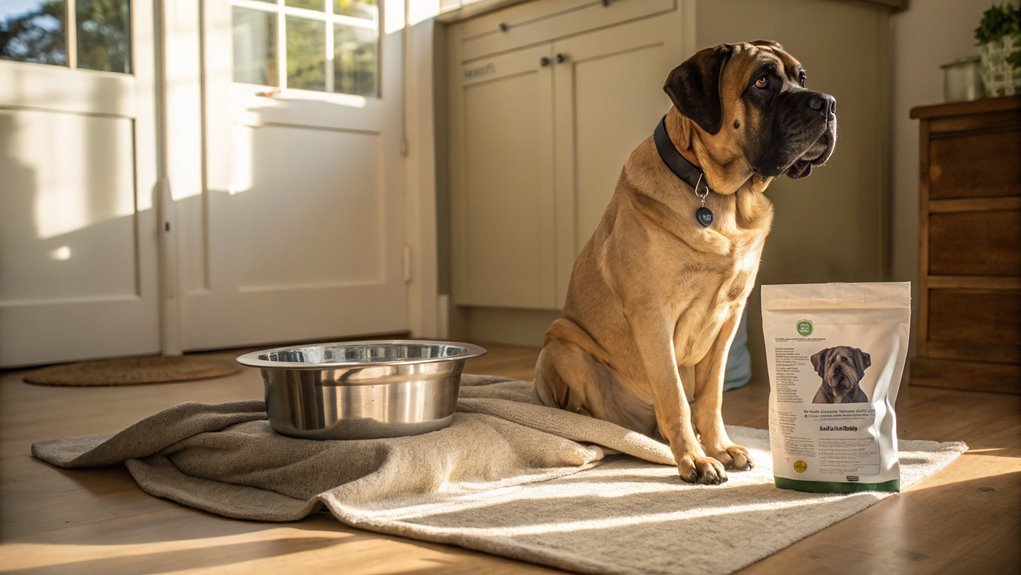
Understanding your Mastiff’s temperament lays the groundwork for meeting their unique nutritional needs. These gentle giants thrive on high-quality nutrition that supports their size and energy levels. When choosing food, I focus on proper nutrition sourcing—opting for premium brands rich in protein and healthy fats. It’s crucial to avoid fillers that can lead to weight gain or digestive issues.
Portion control is equally important. I carefully measure their meals, adjusting based on their activity level and age. Overfeeding can lead to obesity, which is a common issue in Mastiffs. Always consult with your vet for personalized recommendations, ensuring your Mastiff stays healthy and happy. With the right nutrition, your gentle giant can truly flourish!
How to Keep Your Gentle Giant Active?
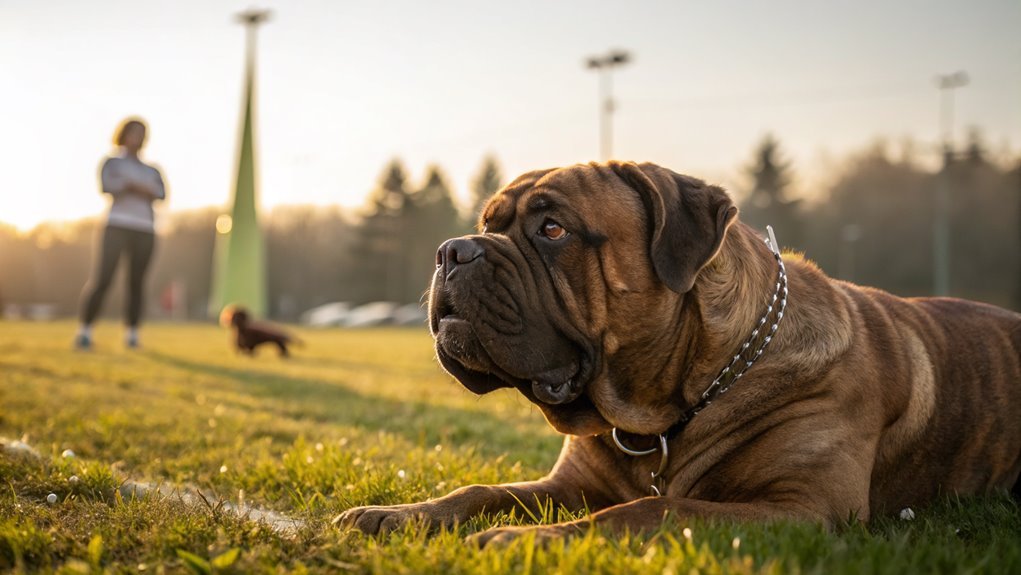
How can I keep my gentle giant active and healthy? It’s essential to incorporate calming exercise into our daily routine. I love taking my Mastiff on leisurely walks; they help him burn off energy without overexerting himself. Leash training has been a game changer, allowing us to enjoy these walks safely and comfortably.
I also find that gentle play, like tug-of-war or fetching a soft toy, keeps him engaged without risking injury. Swimming can be another fantastic option—it’s easy on their joints and a fun way for them to cool off. Lastly, I schedule regular playdates with other dogs; socializing keeps his spirits high and encourages natural activity. Keeping my gentle giant active is all about balance and fun!
Essential Grooming Tips for Your Mastiff
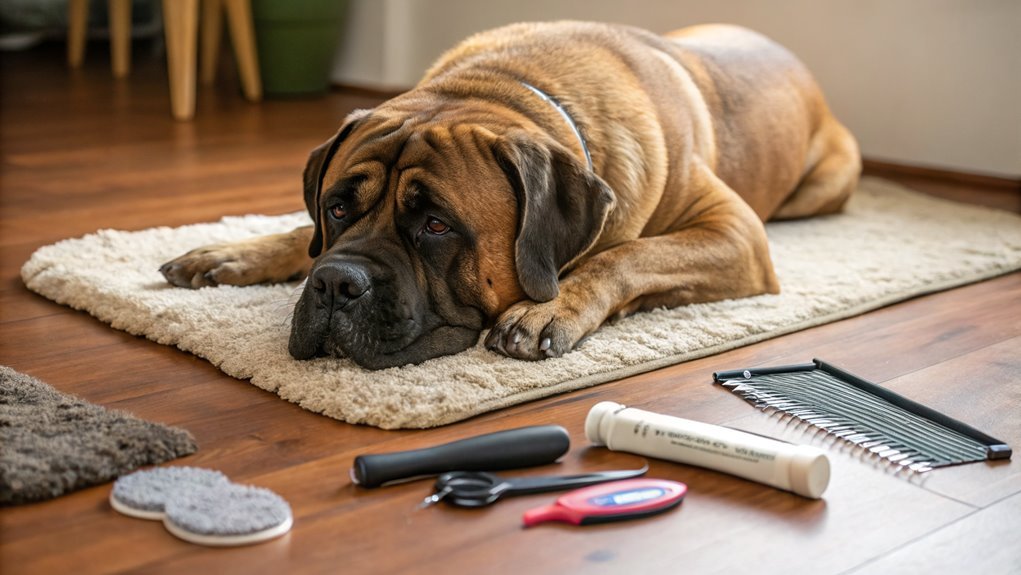
Keeping my Mastiff active leads to a happy and healthy dog, but grooming is just as important for his overall well-being. I’ve found that establishing a consistent grooming routine makes a world of difference. Regular brushing helps manage shedding and keeps his coat looking shiny and healthy. I typically brush him once a week, focusing on areas that tend to mat, like behind the ears and under the legs.
Bathing should be done every few months or as needed, using a gentle dog shampoo to maintain skin health. Don’t forget to check his ears and trim his nails regularly, too. A well-maintained coat not only looks great but also contributes to my Mastiff’s comfort and happiness.
Socialization Strategies for a Happy Mastiff Family

What makes a Mastiff truly happy? Socialization! I’ve learned that introducing my Mastiff to various environments and people strengthens our bond and enhances his well-being.
Acknowledge the socialization pitfalls, like overwhelming him with too many new experiences at once. Start slow; I often take him to quiet parks or small gatherings to ease him into different family dynamics.
Encourage positive interactions with other pets and children, which helps him feel secure and confident. Regular visits to dog-friendly places can also boost his social skills.
Ultimately, a well-socialized Mastiff not only thrives but also brings joy to the entire family. Remember, consistency is key, so make socialization a fun part of your routine!
Frequently Asked Questions
How Can I Train My Mastiff Effectively?
To train my mastiff effectively, I focus on positive reinforcement and consistent training techniques. I also create a structured exercise planning routine to keep him engaged and well-behaved, which makes training a rewarding experience for both of us.
What Are Common Health Issues in Mastiffs?
Mastiffs often face common health concerns like hip dysplasia and heart issues. I’ve noticed breed-specific symptoms can include excessive drooling and joint pain. Regular vet check-ups help catch these problems early, ensuring my dog stays healthy.
How Much Space Does a Mastiff Need?
Mastiffs need ample space to move comfortably, ideally a home with a yard. Their exercise needs, training obstacles, and socialization requirements all play into their health risks and lifespan, especially in apartment living. Regular vet checkups are essential.
Can Mastiffs Live in Apartments?
Yes, mastiffs can live in apartments if you ensure they get enough exercise and practice good canine etiquette. With proper apartment fitness routines, they adapt well, enjoying their space without feeling cramped or restless.
What Is the Average Lifespan of a Mastiff?
Mastiffs typically live around 6 to 12 years. I’ve noticed many misconceptions about their lifespan and exercise myths. Proper care can help maximize their time with us, making those years even more special.
Conclusion
In caring for your mastiff, remember that these gentle giants thrive on love, attention, and proper training. By understanding their unique needs, providing balanced nutrition, and keeping them active, you’ll foster a happy and healthy environment. Don’t forget the importance of grooming and socialization to help them shine in family life. With your dedication, your mastiff will not only be a loyal companion but also a cherished member of your family. Enjoy every moment together!