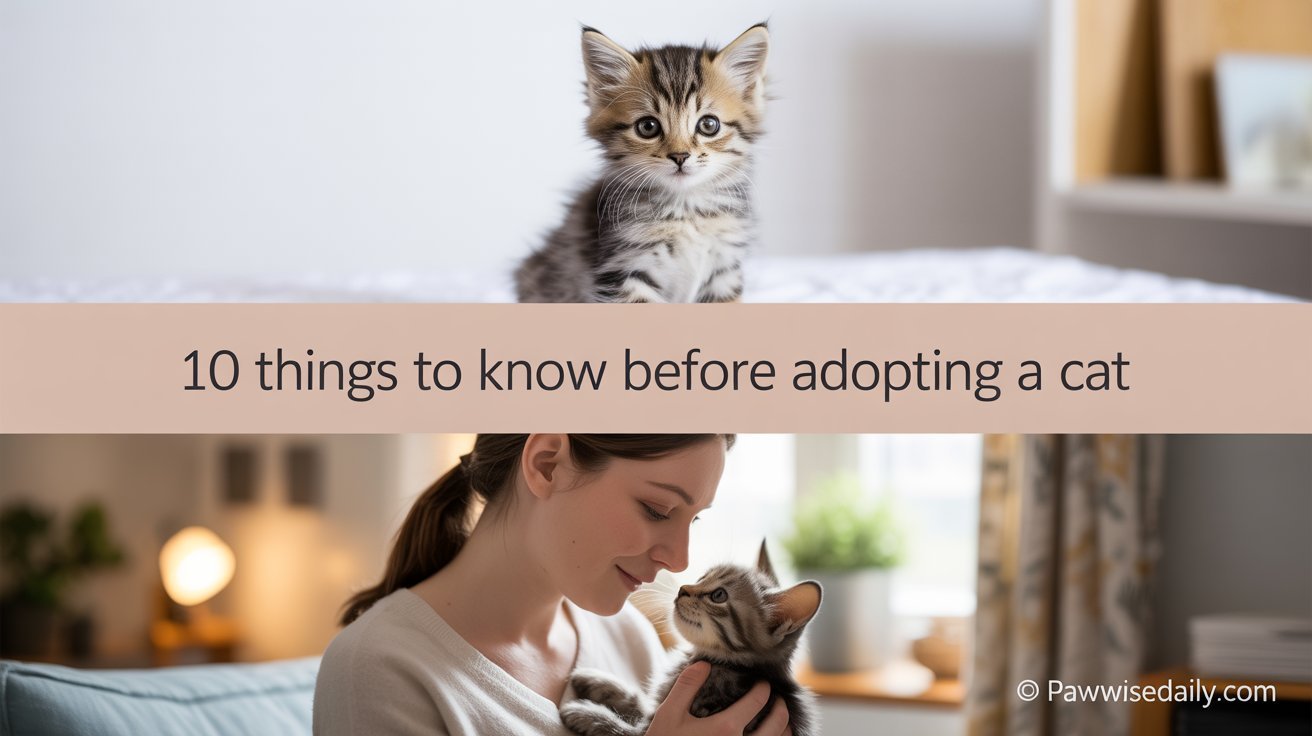

Featured image: Preparing to adopt a shelter cat. Image source: Fear Free Happy Homes.
Adopting a cat can be one of the most rewarding decisions you’ll ever make, but it’s also a long-term commitment. Before you bring home a kitten or adult cat, it helps to understand what they need physically, emotionally, and medically. From litter box setup to veterinary care, the right preparation can make the transition easier for both you and your new pet ASPCA Cornell Feline Health Center
1) Not every cat is the right fit for every home
Before adopting, think beyond appearance. Age, energy level, personality, and your household setup all matter. Kittens are usually playful and high-energy, while adult cats tend to have more established personalities, which can make it easier to find a good match for your lifestyle Cornell Feline Health Center
If you live in a small apartment, work long hours, or already have other pets, those factors should shape your decision. A good adoption match is about compatibility, not just cuteness Cornell Feline Health Center
2) Your cat’s life stage affects care needs
Cats move through different life stages, and each one comes with different needs for nutrition, preventive care, and monitoring. The AAHA/AAFP guidelines define the major stages as kitten, young adult, mature adult, and senior AAHA
That means adopting a kitten is very different from adopting a senior cat. Kittens need more supervision and training, while older cats may need more frequent wellness monitoring AAHA Cornell Feline Health Center
3) The adoption fee is only the beginning
A new cat needs a proper setup. The ASPCA recommends having high-quality cat food, food and water bowls, a litter box and litter, toys, a scratching post or pad, a carrier, and a bed or resting area ready before your cat comes home ASPCA
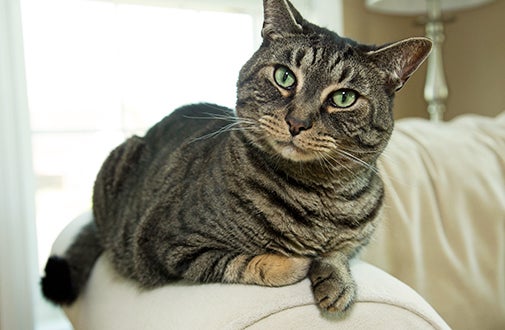
Image source: ASPCA General Cat Care.
You should also budget for routine veterinary visits, vaccines, parasite prevention, and unexpected health issues. Responsible cat ownership means planning for ongoing expenses, not just the day of adoption ASPCA AAHA
4) A vet visit should happen soon after adoption
Any new cat should be checked by a veterinarian as soon as possible after coming home, especially if the medical history is incomplete or unknown. That first visit helps confirm vaccine status, check for parasites, and screen for common health concerns Cornell Feline Health Center
The feline life stage guidelines recommend at least annual exams for all cats, while senior cats should be seen at least every six months AAHA
5) Indoor cats are generally safer
Keeping cats indoors reduces the risk of trauma, parasites, fights, and infectious diseases. According to the ASPCA, indoor cats generally live safer lives than cats with unrestricted outdoor access ASPCA
If your cat might ever get outside, identification matters. A microchip and safety collar with ID tag can help your cat get home if they become lost ASPCA
6) Litter box setup matters more than most people think
Cats are often very particular about their litter box. The ASPCA recommends placing it in a quiet, accessible location and scooping it at least once a day. Cornell adds that many cats prefer simple, non-hooded boxes and unscented, fine-textured litter ASPCA Cornell Feline Health Center
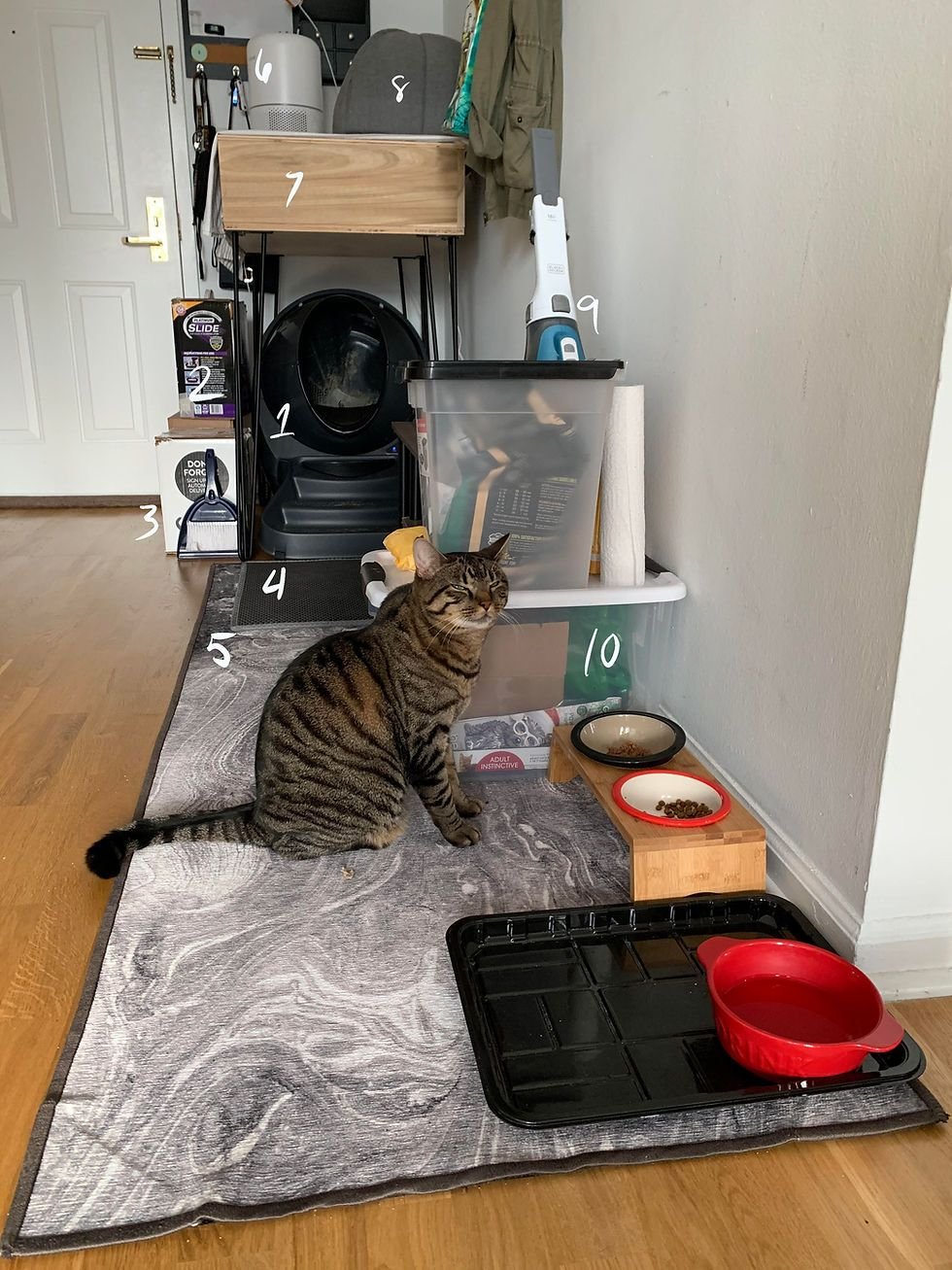
Image source: The Gibson Chronicles.
A helpful rule is one litter box per cat, plus one extra. If your cat suddenly stops using the box, don’t assume it’s behavioral. It may be a medical issue that needs veterinary attention Cornell Feline Health Center ASPCA
7) The first few days should be slow and calm
A new cat should not be overwhelmed on day one. Animal Humane Society recommends starting with a small, quiet room stocked with a litter box, water, bedding, toys, and a hiding spot. This gives the cat time to adjust gradually without too much stress Animal Humane Society

Image source: ASPCA General Cat Care.
This safe-room approach is especially helpful if you already have other pets in the home, because it allows for slower introductions and reduces stress for everyone involved Animal Humane Society
8) Scratching is normal, so plan for it
Cats scratch because it’s a normal and necessary behavior. It helps maintain their claws and allows them to stretch and mark territory. The ASPCA recommends a sturdy scratching post or pad, and Cornell notes that some cats prefer vertical surfaces while others prefer horizontal ones ASPCA Cornell Feline Health Center
Image source: Pioneer Pet.
If you set up appropriate scratching areas early, you’ll protect your furniture and help your cat settle in more naturally ASPCA
9) Nutrition is a big deal
Cats need a complete and balanced diet appropriate to their life stage. The ASPCA notes that cats require taurine for heart and eye health, and Cornell recommends using a nutritionally complete food formulated for kittens or adults as needed ASPCA Cornell Feline Health Center
Fresh water should always be available, and portion control matters. Obesity is common in cats and can contribute to serious health problems over time Cornell Feline Health Center
10) Some households need extra hygiene precautions
If someone in the home is pregnant or immunocompromised, it’s important to follow good litter box hygiene. The CDC advises changing the litter box daily because the parasite that causes toxoplasmosis does not become infectious until 1 to 5 days after being shed in cat feces CDC
The CDC also recommends wearing gloves while gardening or handling soil that could be contaminated and avoiding raw or undercooked meat in a cat’s diet CDC
Final thoughts
Adopting a cat is easier when you prepare ahead of time. The right supplies, a calm introduction, a vet visit, and realistic expectations can make a huge difference in your cat’s comfort and long-term wellbeing. A little planning up front helps create a smoother start and a better bond from day one ASPCA Cornell Feline Health Center
FAQ
Is it better to adopt a kitten or an adult cat?
It depends on your lifestyle. Kittens need more supervision and training, while adult cats usually have more predictable personalities Cornell Feline Health Center
How soon should I take my adopted cat to the vet?
As soon as possible after bringing them home, especially if their health history is incomplete or unknown Cornell Feline Health Center
How many litter boxes do I need?
A strong general rule is one litter box per cat, plus one extra Cornell Feline Health Center