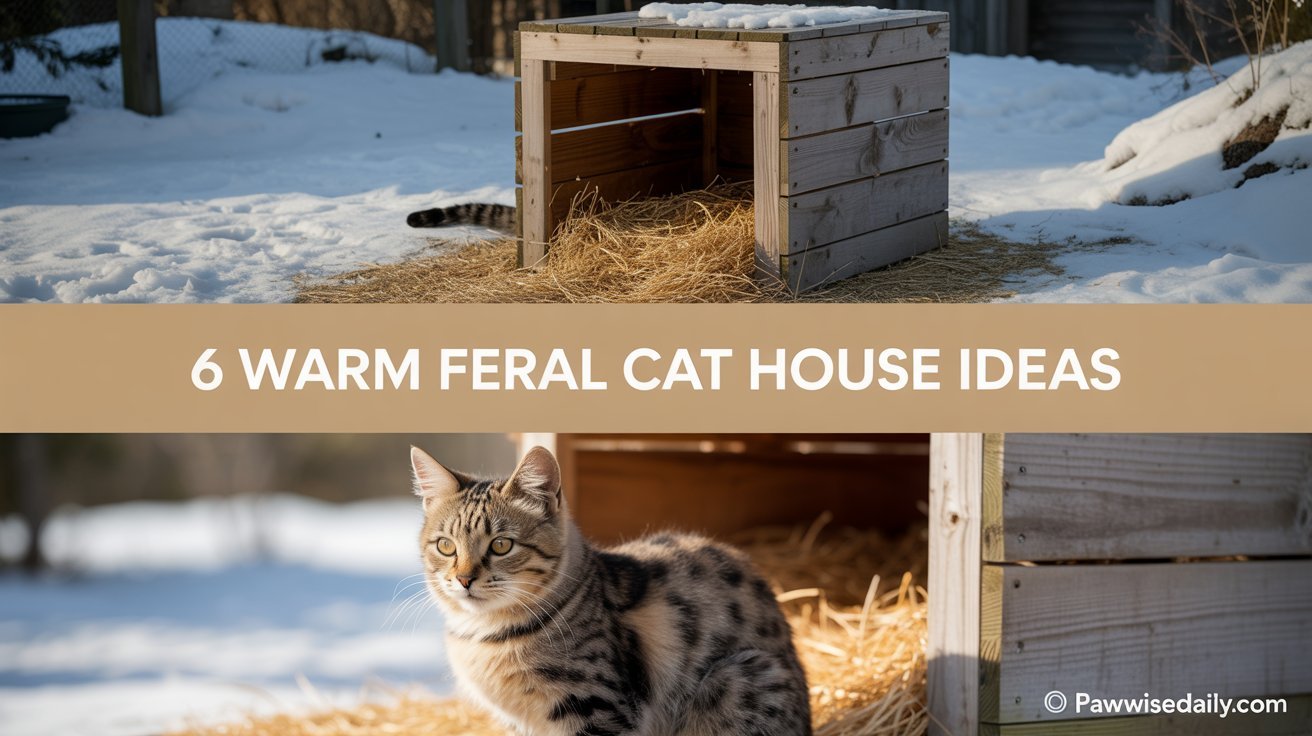
When temperatures drop, outdoor and community cats need more than a hiding spot — they need a shelter that stays dry, blocks wind, and holds warmth. Humane groups consistently recommend winter cat shelters that are insulated, appropriately sized, raised off the ground, and lined with straw, not hay or blankets. Smaller shelters warm up faster from body heat, and entrances should be just large enough for cats while staying above ground level to reduce snow and rain intrusion. Humane World for Animals Alley Cat Allies
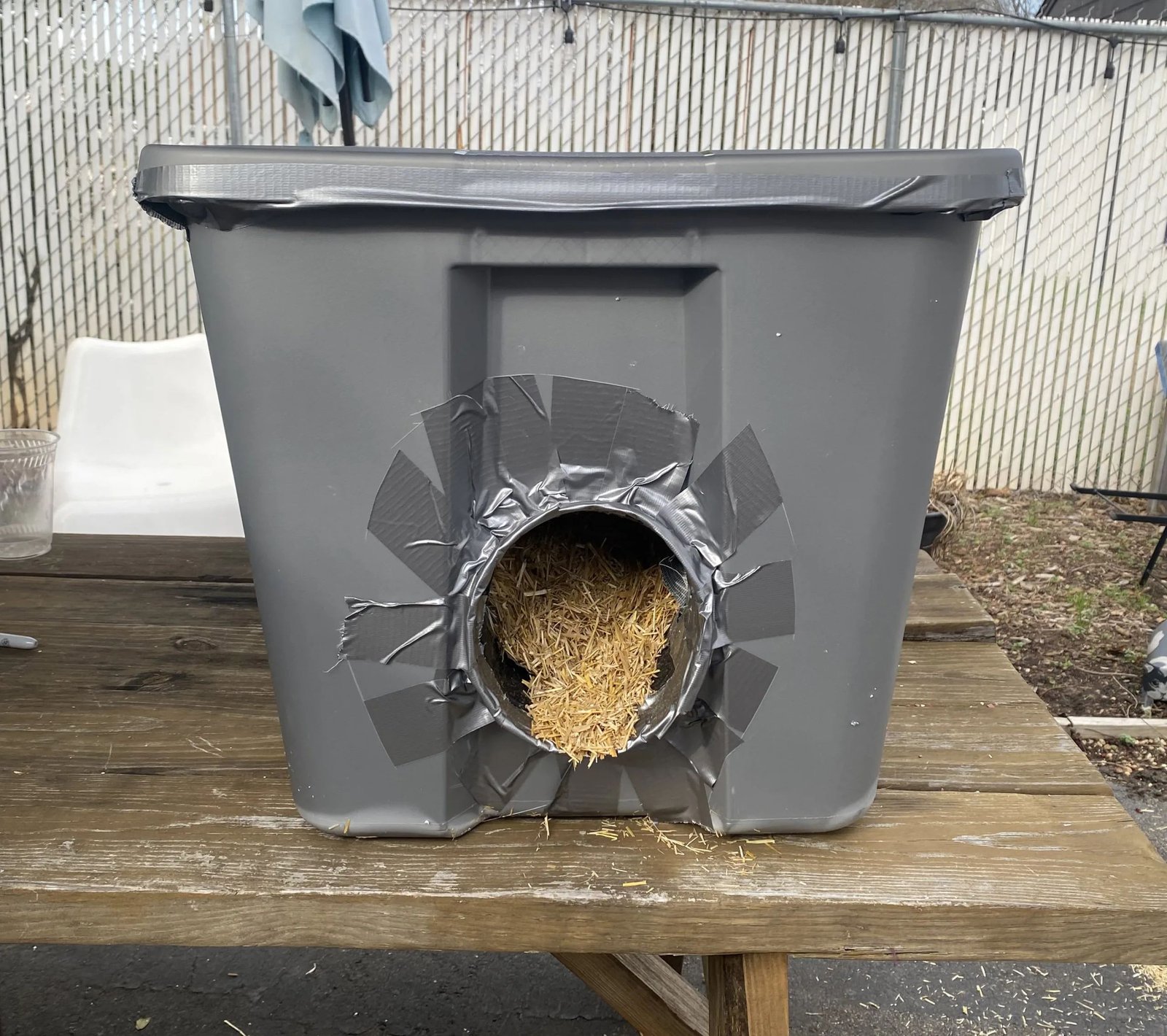
Image source: SPCA of Wake County
If you’re looking for practical winter shelter inspiration, these six ideas are among the warmest and most effective options for helping feral and stray cats through cold weather.
1. Double-bin insulated tote shelter
One of the best low-cost ideas is the classic double-bin shelter: a smaller plastic tote placed inside a larger one, with insulation between the walls and straw inside. Alley Cat Allies recommends a large plastic tub of about 30 gallons and a smaller one around 20 gallons for this style of DIY shelter. This design works because it creates an insulating air gap while keeping the interior compact enough to hold body heat. Alley Cat Allies
This is a great option if you want something affordable, weather-resistant, and easy to replace. It also works well for caregivers managing several community cats because you can build multiple units quickly with hardware-store materials. For even better cold-weather performance, keep the doorway small and position it several inches above ground level. Alley Cat Allies Neighborhood Cats
Why it’s warm: insulated walls, small interior space, moisture-resistant bedding.
Best for: DIY beginners and multi-cat colonies.
Helpful guide: How to Build an Outdoor Shelter
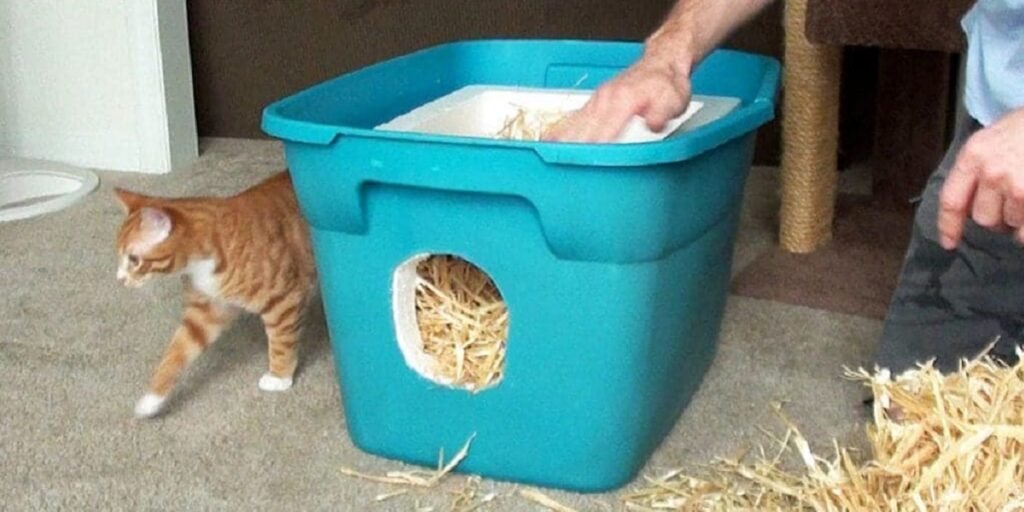
Image source: Cole & Marmalade
2. Styrofoam cooler cat house
A thick Styrofoam cooler shelter is one of the warmest simple designs for winter because foam holds heat exceptionally well. Best Friends Animal Society recommends using large Styrofoam coolers, ideally around 1.5 inches thick or more, and cutting a small entrance hole about 6 inches across. They also suggest wrapping the exterior in thick plastic and waterproof tape to protect the shelter from moisture and wind. Best Friends Animal Society
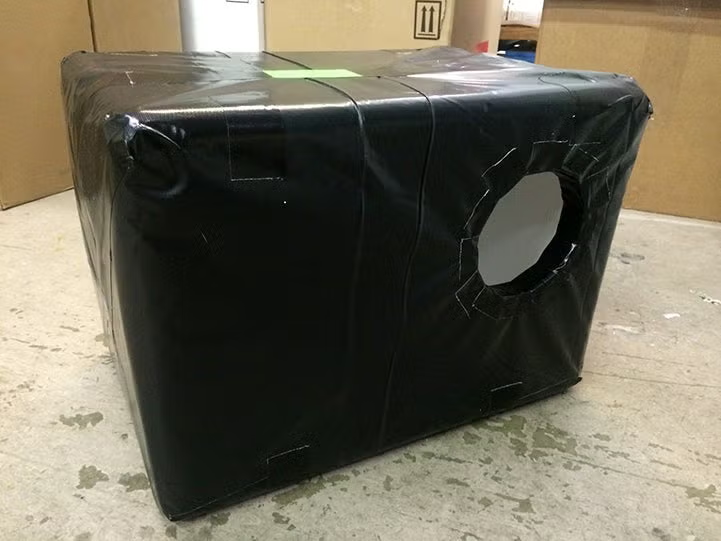
This is an especially smart idea for one or two cats in very cold climates because the walls are naturally insulating even before you add straw. If the shelter will sit in exposed weather, adding a slanted cover or awning over the door helps keep snow and rain from blowing inside. Best Friends Animal Society
Why it’s warm: thick foam walls trap heat better than thin plastic alone.
Best for: small colonies, tight budgets, and harsh winter nights.
Helpful guide: How to Help Outdoor Cats in Winter
3. Raised wooden cat house with a door flap
If you want something sturdier and more permanent, a raised wooden cat house is a strong cold-weather choice. Humane World for Animals notes that outdoor cat shelters should be warm, dry, well-insulated, and appropriately sized rather than oversized. A wooden shelter that is insulated, lifted off the ground, and fitted with a small door flap checks all those boxes. Humane World for Animals
A raised wooden house helps protect cats from frozen ground, dampness, and drifting snow. A lightweight flap over the entrance can reduce drafts, while the elevated base helps prevent flooding and slush from getting inside. This type of shelter is ideal for porches, sheds, barns, and fenced yards where you want something more durable than a tote. Alley Cat Allies Best Friends Animal Society
Why it’s warm: insulated walls, improved dryness, less ground chill, less wind exposure.
Best for: long-term colony care and semi-permanent placement.
Helpful guide: Winter shelter tips for outdoor cats
Image source: Kitsap Humane Society
4. Rigid foam-board shelter
For maximum insulation without spending much, a rigid foam-board shelter is another excellent idea. Neighborhood Cats describes shelters made from 2-inch-thick rigid foam board, cut and assembled into a compact box. They also recommend lining storage-bin shelters with 1-inch rigid foam insulation on the floor, walls, and ceiling. Neighborhood Cats
This shelter style is especially effective in cold climates because the insulation surrounds the cat on nearly every side. Neighborhood Cats also recommends a 6-by-6-inch doorway placed a few inches above the shelter floor to reduce flooding and snow intrusion. Neighborhood Cats
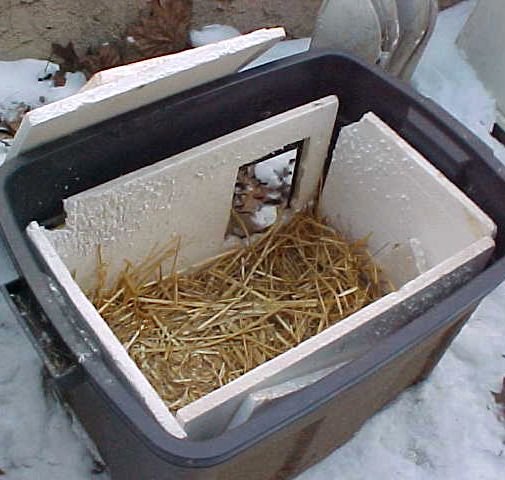
Why it’s warm: thick insulation all around and a compact footprint.
Best for: very cold regions and caregivers who want excellent heat retention.
Helpful guide: Neighborhood Cats winter shelter guide
5. Paired shelters with a windbreak canopy
A smart upgrade for cold weather is not just one shelter, but two shelters placed facing each other with a covered gap between them. Both Humane World for Animals and Neighborhood Cats suggest arranging shelters this way and spanning the space with a board or canopy to create a protected feeding and transition zone. This setup blocks wind, reduces exposure, and gives cats extra protected space to move between shelter and food. Humane World for Animals Neighborhood Cats
This idea works particularly well for colony caregivers because it creates a micro-sheltered area without needing a fully enclosed structure for food and water. Just make sure water bowls stay outside the sleeping shelter, since spilled water can turn a warm house into a cold, damp box. Humane World for Animals
Why it’s warm: cuts wind, provides dry access to food, and creates a more protected setup overall.
Best for: two or more community cats sharing a feeding area.
Helpful guide: How to care for outdoor cats in winter
Image source: Alley Cat Advocates
6. Heated outdoor cat house with pet-safe warming support
If you have access to electricity and can monitor the setup, a heated outdoor cat house can be one of the warmest winter options. Best Friends Animal Society recommends using only heating pads made specifically for pets, especially low-watt heated pet beds designed for outdoor cat houses. They also mention heated dishes to help prevent freezing. Best Friends Animal Society
This idea works best when combined with insulation, straw, and a dry, wind-protected location. In other words, heat should be an upgrade — not a replacement for good shelter design. The house should still be small enough to hold warmth, raised off the ground, and protected from moisture. Best Friends Animal Society Alley Cat Allies
Why it’s warm: combines insulation with controlled supplemental heat.
Best for: porches, barns, garages, and monitored outdoor setups.
Helpful guide: Best Friends winter outdoor cat guide
The most important winter shelter rule: use straw, not hay
No matter which feral cat house idea you choose, the bedding matters. Alley Cat Allies says straw repels moisture, while hay becomes soggy and can mold. They also advise against towels and blankets because they soak up moisture and make shelters wet and cold. Humane World for Animals gives similar advice, noting that blankets, towels, folded newspaper, and hay are poor choices for winter bedding. Alley Cat Allies Humane World for Animals
A warm house is not just about walls and a roof. Dry bedding, a small doorway, good placement, and shelter elevation are what make the difference when the weather turns dangerous. Alley Cat Allies
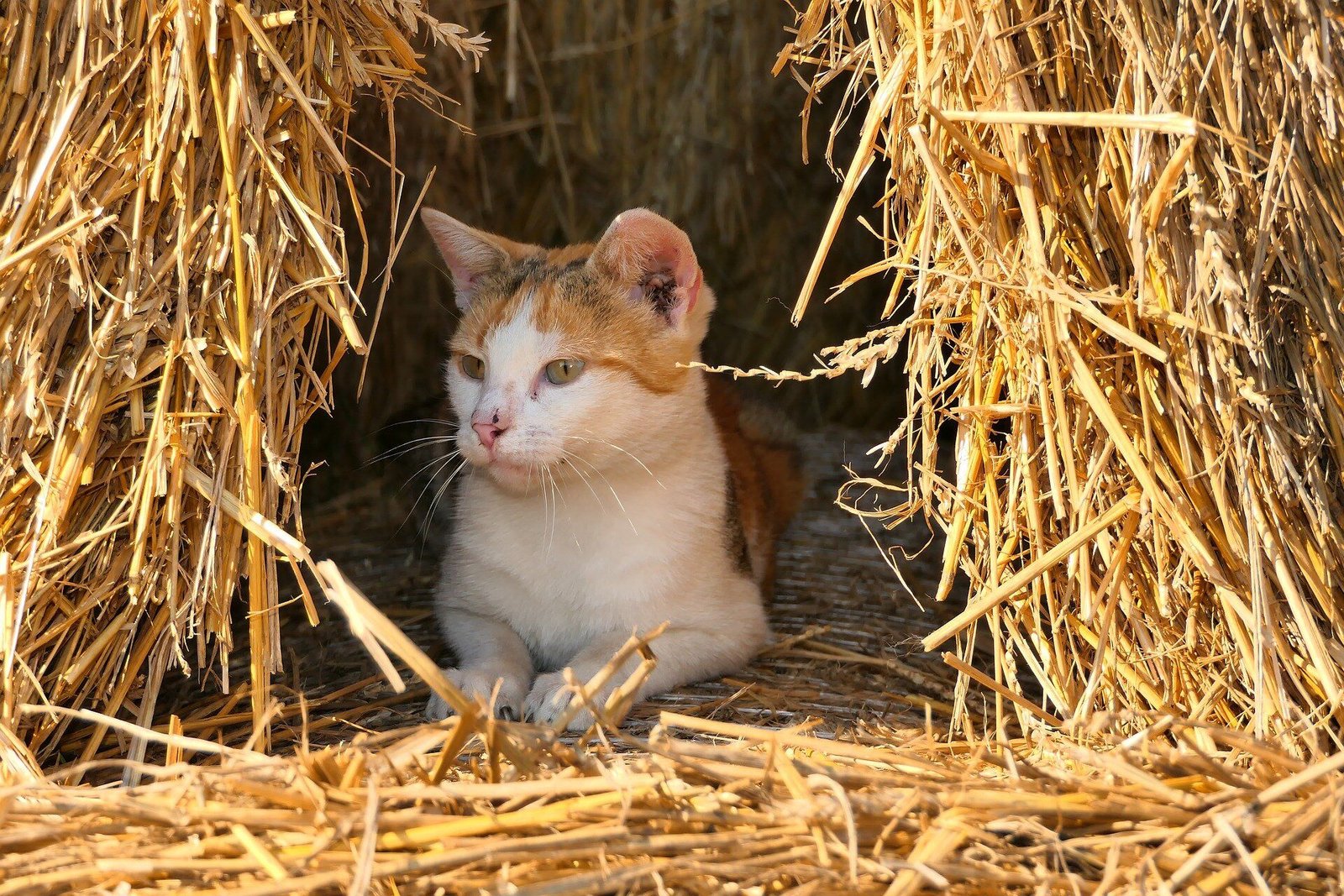
Image source: Feral Cat Coalition of Oregon
Quick checklist for a warmer feral cat house
A good winter cat shelter should stay small, dry, insulated, and off the ground. The doorway should be only big enough for a cat, face away from prevailing wind, and sit above ground level to avoid flooding or snow buildup. If possible, place shelters near walls, fences, porches, or other familiar structures rather than out in the open. Alley Cat Allies Neighborhood Cats
If you’re feeding outdoor cats in winter, provide extra calories and fresh water, and keep food and water protected from the elements. Just don’t put water bowls inside the sleeping shelter, where spills can create dangerous dampness. Humane World for Animals Best Friends Animal Society
Final thoughts
The best warm feral cat house ideas are the ones that solve the real winter problems: wind, wetness, frozen ground, and heat loss. Whether you choose an insulated tote, a foam cooler, a raised wooden shelter, a rigid-foam build, a two-shelter windbreak, or a heated pet-safe house, the goal is the same — give outdoor cats a place that stays warm, dry, and protected when cold weather hits. Humane World for Animals Alley Cat Allies