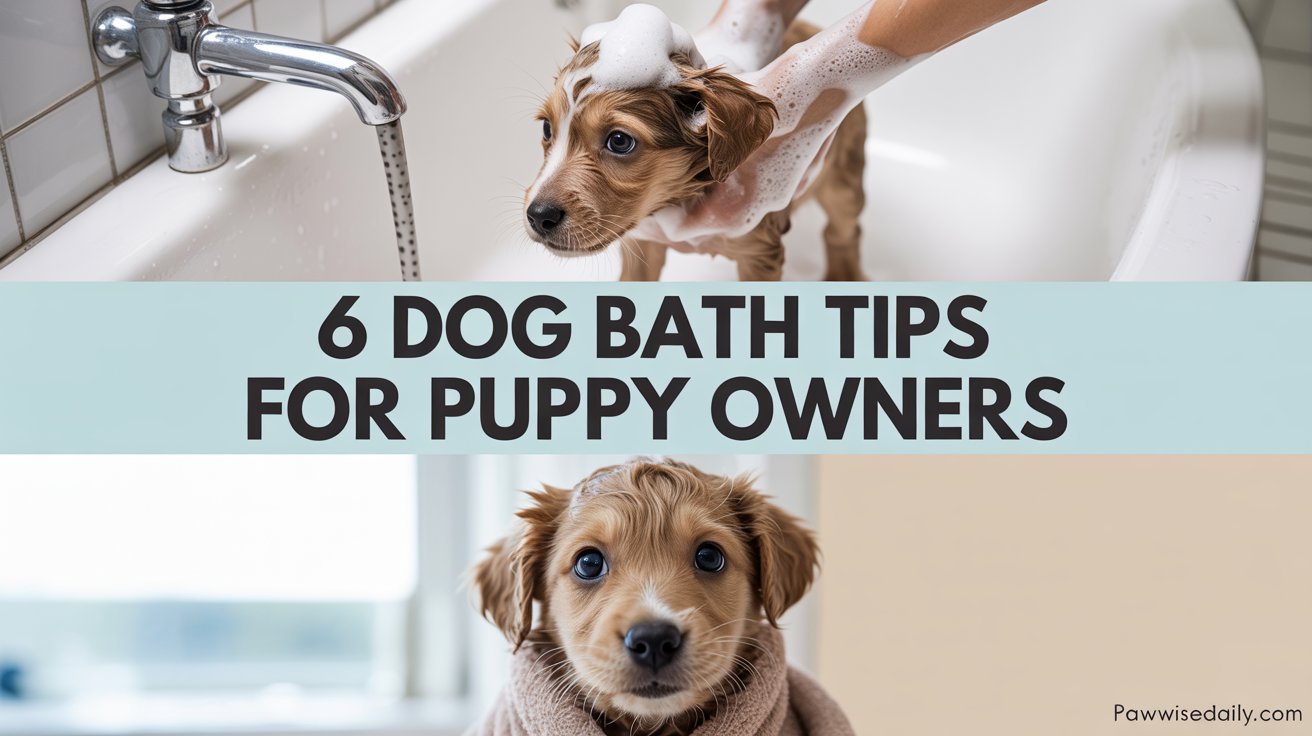
Bath time is one of those early puppy milestones that can either become a smooth routine or a weekly struggle. The good news is that most puppies do not need complicated grooming routines right away. What matters most is keeping the experience gentle, safe, and positive so your puppy learns that baths are no big deal. Source Source
Image: “puppy … grooming, bath time” via PxHere.
1. Let your puppy get used to the tub before the first real bath
A first bath should not begin with soap and splashing. Several animal-care sources recommend introducing the tub gradually first: let your puppy stand in an empty tub, use a non-slip mat, add praise and treats, and only then introduce a little water. This helps prevent the tub itself from becoming scary. Source Source
If your puppy is already nervous, go even slower. VCA suggests rewarding calm behavior in the tub without water, then slowly adding water while continuing to reward generously. For many puppies, high-value treats work better than praise alone. Source
2. Use lukewarm water and puppy-safe products
Water that feels fine to you may still feel too hot or too cold to a puppy. AKC and VCA both recommend lukewarm water, and AKC notes that very young puppies may only need a warm washcloth at first instead of a full shampoo bath. Once your puppy is old enough for shampoo, use a dog-specific, pH-balanced product rather than human shampoo or soap. Source Source Source
If your puppy has sensitive skin, flaking, redness, or recurring itchiness, skip experimenting with random products and ask your veterinarian which shampoo is appropriate. Virginia Tech specifically warns that harsh or unsuitable products can damage the skin barrier and increase irritation. Source
3. Keep water and soap away from the face and ears
One of the easiest ways to make bath time miserable is to get shampoo in your puppy’s eyes or water in the ears. AKC advises using minimal product around the face and being especially careful around the eyes, nose, mouth, and ears. Ontario SPCA recommends avoiding the face with the showerhead and instead using a damp washcloth around those areas. VCA also warns that keeping water out of the ears helps reduce the risk of ear infections. Source Source Source
4. Brush before the bath and rinse longer than you think you need to
A common mistake is wetting the coat first and dealing with tangles later. Virginia Tech recommends brushing thoroughly before bathing to remove loose hair and mats that can trap water and shampoo against the skin. Once the bath starts, rinse extremely well. AKC emphasizes that soap left behind can irritate the skin, and Virginia Tech recommends checking common problem areas like the armpits, groin, behind the ears, and between the toes. Source Source
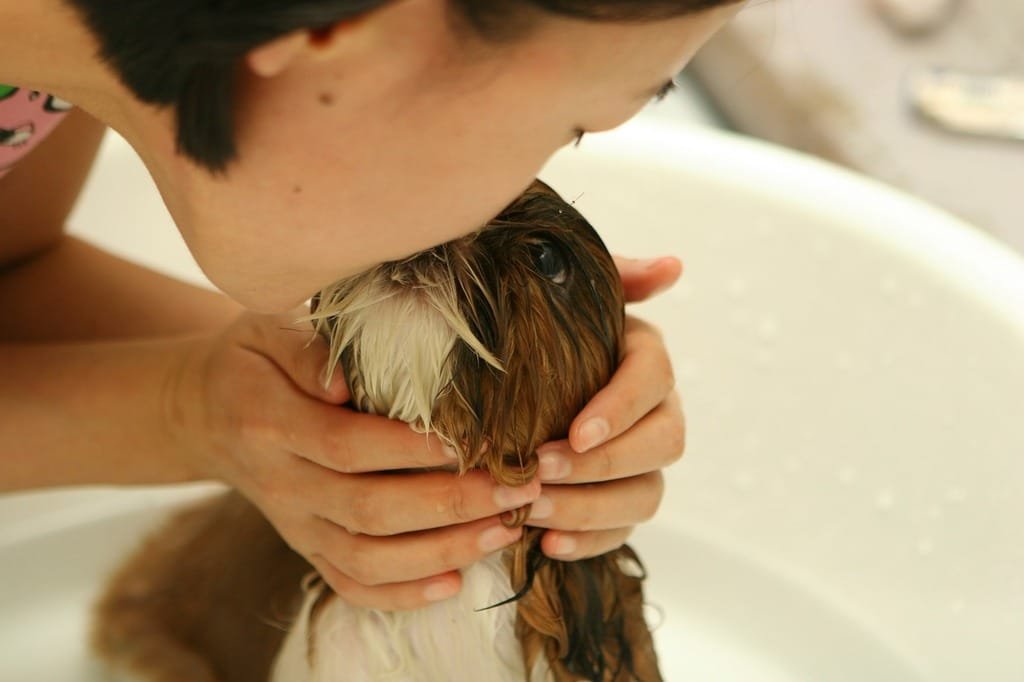
Image: “Dog puppy bath” via PICRYL / GetArchive.
5. Do not overbathe your puppy
Many new owners assume clean means frequent baths, but most healthy puppies do not need bathing every few days. The right schedule depends on coat type, lifestyle, and skin condition. AKC says frequency varies widely by breed and coat, VCA says healthy dogs generally should not be bathed more than once a month, Ontario SPCA says many dogs only need a bath when dirty or roughly every eight to twelve weeks, and Virginia Tech notes that many healthy dogs do well somewhere in the four-to-twelve-week range. Source Source Source Source
A good rule for puppy owners is simple: bathe when your puppy is actually dirty, smelly, or has gotten into something messy, and ask your vet if your puppy has a skin issue or needs medicated shampoo. Source Source
6. Dry gently and make the whole experience positive
The bath is not over when the shampoo is gone. Ontario SPCA recommends toweling off well or using a dryer on low heat if your puppy tolerates it. Virginia Tech adds that towels should be pressed against the coat rather than rubbed aggressively, and that moisture trapped in folds or between toes can cause problems. Source Source
Just as important, end the bath on a happy note. AKC, VCA, and RSPCA all emphasize reward-based handling and gradual exposure for grooming. Praise, treats, patience, and short sessions help your puppy learn that grooming is safe rather than stressful. Source Source Source
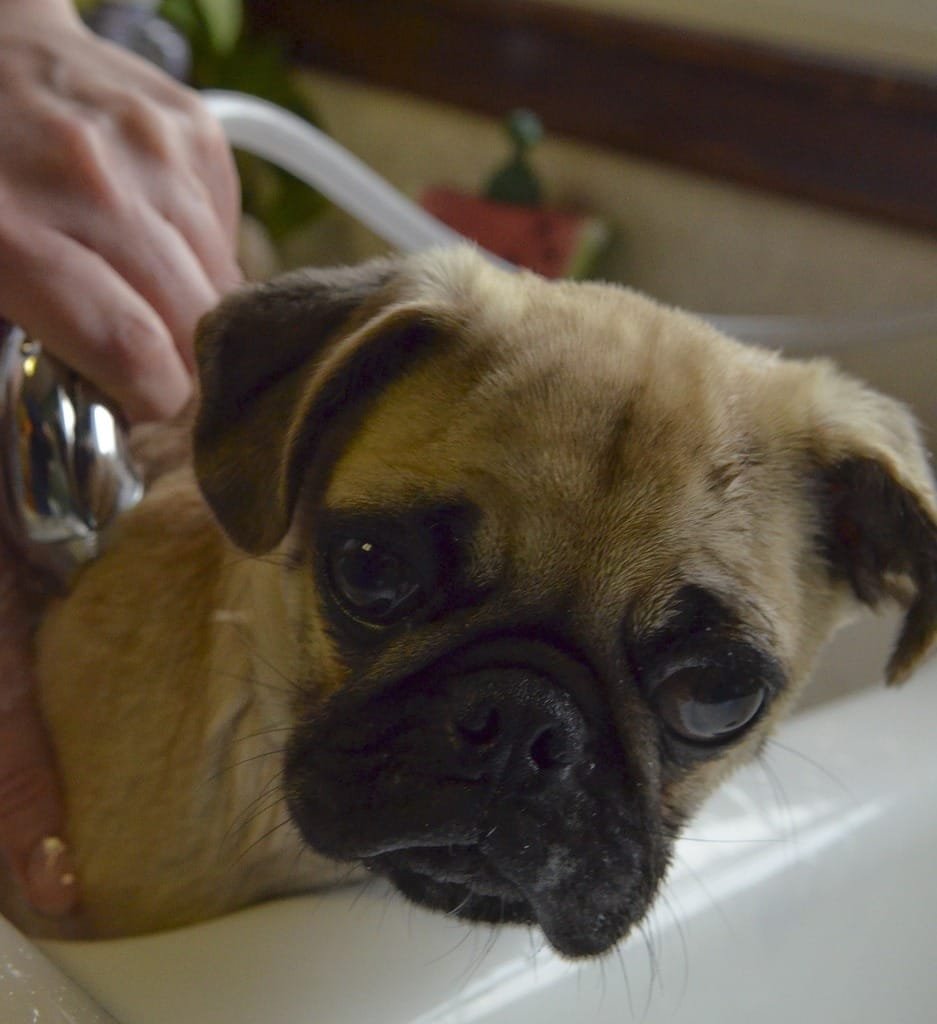
Image: “Pug bath puppy” via PICRYL / GetArchive.
Quick puppy bath checklist
Before you start, set out a non-slip mat, towels, treats, a cup or handheld sprayer, and a dog-safe shampoo. Keep the water lukewarm, avoid the face and ears, rinse thoroughly, dry gently, and stop if your puppy becomes too stressed. Source Source Source
Helpful links for puppy owners
For more detail, here are the best references used in this post: AKC puppy bathing guide, AKC bathing frequency guide, VCA puppy bath tips, Virginia Tech safe bathing practices, Ontario SPCA first bath guide, and RSPCA grooming advice. Source