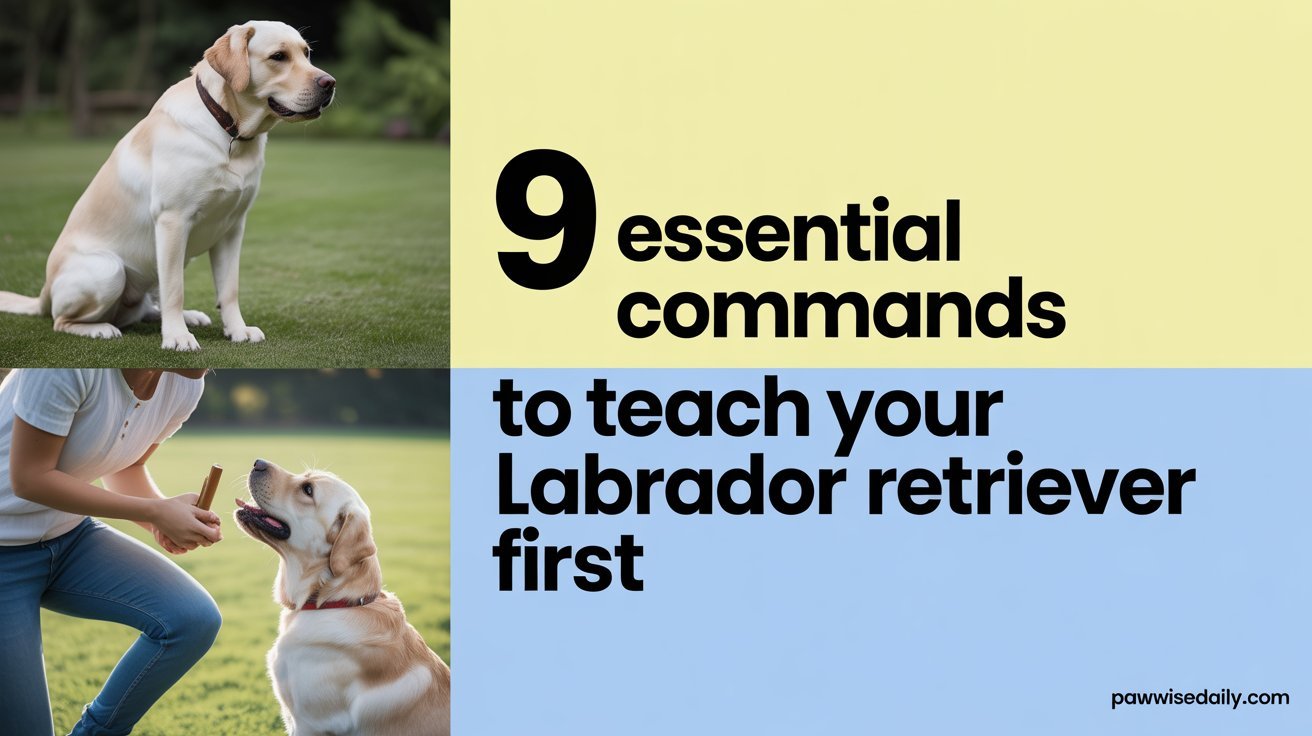
Labrador Retrievers are friendly, active, and eager to work with people, which makes them excellent beginner dogs to train. According to the American Kennel Club, Labs are quick learners who can start learning basic obedience as soon as they come home, and reward-based practice helps build both manners and a stronger bond. Source Source
Image source: PxHere
Before you begin, keep training short, upbeat, and repeatable. Blue Cross recommends sessions of about two minutes, practiced several times a day, while AKC and RSPCA both emphasize starting in low-distraction settings and rewarding the exact behavior you want right away. Source Source Source
1. Name Recognition
If your Lab instantly looks at you when you say their name, every other command becomes easier. Blue Cross suggests holding a reward near your eye line, saying your dog’s name, and rewarding the moment they look at you. That teaches attention first, which becomes the foundation for recall, leash work, and impulse control later. Source
A simple way to practice is to say your dog’s name once in a cheerful voice, wait for eye contact, then reward immediately. If your Lab ignores you, don’t repeat the name over and over; instead, make the setup easier by moving to a quieter room or using a better treat. Source
2. Sit
“Sit” is usually the first formal cue because it gives your dog an easy, polite default behavior. AKC recommends luring the dog with a treat from the nose up and slightly back so the rear naturally drops, then praising and rewarding as soon as the sit happens. They also caution against pushing your dog’s hindquarters down, which can be confusing or intimidating. Source
For Labradors, “sit” is especially useful at doors, before meals, when greeting visitors, and before clipping on the leash. Once your dog follows the treat smoothly, fade the lure into a hand signal, then add the word “sit” just before the motion. Source Source
3. Down
“Down” helps your Lab settle, stay in one place longer, and shift from excitement into calm. RSPCA teaches it by starting from a sit, moving a treat from the dog’s nose toward the chest and then down to the floor, rewarding as soon as the dog lies down. They also recommend rewarding while the dog remains down to build duration. Source
Because many young Labs are wiggly, don’t rush this cue. Practice in short sessions, reward the smallest wins, and then gradually rehearse in more distracting places like the yard or a quiet park once your dog understands the motion indoors. Source
4. Stay or Wait
Once your Lab can sit or lie down, the next skill is learning not to pop up immediately. RSPCA recommends asking for a down or sit, giving a hand signal, waiting only a few seconds at first, then rewarding while the dog is still holding position. From there, increase time first, then distance, then distractions. Source
This command pays off in everyday life: waiting at doors, staying still while guests enter, or pausing safely before crossing a street. The key is to set your dog up to win, which means ending the repetition before they break position whenever possible. Source
5. Come
A reliable recall is one of the most important safety commands you can teach. RSPCA advises using something your dog loves, such as a high-value treat or toy, then moving away, saying your dog’s name and “come” in a friendly tone, and rewarding generously when they arrive. They also suggest using a long training line outdoors while recall is still developing. Source
Just as important, never call your dog to punish them, and don’t only use recall when the fun is about to end. If “come” always predicts praise, treats, or another game, your Labrador will be much more likely to race back to you. Source Source
Image source: Dogs Trust
6. Heel or Loose-Lead Walking
Loose-lead walking matters because a strong young Labrador can easily learn that pulling gets them where they want to go faster. Dogs Trust explains that dogs often keep pulling simply because moving forward rewards the behavior, so the training goal is to teach that staying by your side makes the walk continue and pulling makes it stop. Source
Start in a calm space and reward your dog for being beside you. Then add movement, pay often while your dog stays in position, and stop the instant the leash tightens. Blue Cross also recommends deciding which side you want the dog to walk on and giving a cue such as “heel” before you set off. Source Source
Image source: San Diego Humane Society
7. Leave It
“Leave it” teaches self-control before your dog grabs the wrong thing. RSPCA’s method starts with a treat in your closed hand: wait for your dog to stop nosing at it, then reward when they back off. Once that choice becomes reliable, add the cue word “leave” as your dog disengages. Source
This is an especially valuable cue for a curious Labrador because it helps with food on the floor, dropped medication, trash on walks, and all the everyday temptations dogs investigate with their noses. Build slowly from a closed fist to an open palm, then to real-life objects. Source
Image source: Dogs Trust
8. Drop It
If “leave it” means “don’t pick that up,” then “drop it” means “let go of what’s already in your mouth.” AKC recommends teaching this as a trade: give your dog a low-value toy, present a high-value treat, mark and reward the moment the toy drops, then return the toy so the exchange feels rewarding rather than like a loss. Source
AKC also warns against chasing your dog or prying their mouth open, since both can turn the situation into a dangerous game or increase guarding behavior. For retriever breeds, this command is a must because carrying objects is natural and frequent. Source
9. Bed, Mat, or Settle
Not every essential command is about action; some are about turning the volume down. Dogs Trust recommends teaching settle by rewarding relaxed behavior on a blanket or mat in a quiet area, then gradually increasing the time before rewards and later adding distractions. Blue Cross also lists “go to bed” and “settle” as natural next-stage practical skills after the basics. Source Source
For a Labrador, this command is gold when guests come over, when you’re cooking, or when you want your dog to relax at a café or on family visits. Instead of constantly telling your dog what not to do, you’re giving them a clear job: go to your spot and chill. Source
The Best Order to Teach These Commands
If you want a simple progression, start with name recognition, then sit, down, and come. After that, add stay, loose-lead walking, leave it, and drop it, with settle running alongside everything else as your “off switch.” That order works well because each command builds on attention, reward timing, and impulse control. Source Source Source
Final Thoughts
Your Labrador does not need marathon sessions to learn well. What works best is consistency, clear rewards, easy wins, and lots of repetition in real-life situations. Labs are eager learners, so if you make training fun and practical from the start, these nine commands will give you the foundation for a polite, confident, happy companion. Source Source