Image source: PxHere
If you love giving your dog a kiss on the head, you’re definitely not alone. But here’s the truth: some dogs tolerate kisses, some learn to like them, and some really don’t enjoy them at all. Dogs do not naturally use human-style kissing to communicate affection, so whether your dog likes it depends more on their personality, past experiences, and body language than on the kiss itself. AKC Daily Paws Reader’s Digest
The short answer
Do dogs like kisses? Sometimes — but not always. Many dogs do not instinctively understand kisses as affection. Some dogs learn that kisses predict praise, petting, treats, or calm attention, so they come to accept or even enjoy them. Others may find a face moving directly toward them stressful or threatening. Daily Paws Kinship Reader’s Digest
1) Dogs don’t naturally understand kisses the way humans do
Humans use kisses to show love. Dogs don’t. In dog-to-dog communication, kissing is not a normal affection ritual the way it is for people. That means your dog is not automatically thinking, “Wow, my human loves me” when you lean in for a smooch. They may simply be tolerating something strange happening near their face. Daily Paws Kinship Reader’s Digest
AKC makes a similar point when discussing hugs: dogs don’t share our instinct for close, face-to-face physical affection, and many owners miss the subtle stress signals dogs show during these interactions. That matters because kisses often come with the same pressure, restraint, staring, and face proximity that can make dogs uneasy. AKC
2) Some dogs can learn that kisses mean good things
Even though kisses aren’t naturally meaningful to dogs, some dogs do learn positive associations. If kisses regularly come with a soft voice, gentle petting, treats, or relaxed bonding time, a dog may decide that the whole routine is pleasant. In other words, the dog may not love the kiss itself as a “kiss,” but they may like what it predicts. Daily Paws Reader’s Digest
That’s why two dogs can respond very differently. One dog may lean in happily because they’ve learned the routine is safe and rewarding. Another may turn away because they never found it comfortable in the first place. Reader’s Digest AKC
3) A dog licking you back does not always mean “I love you too”
People often call licking “dog kisses,” but the meaning is more complicated. AKC notes that licking can sometimes be affection, but it can also be greeting behavior, attention-seeking, salt-seeking, submission, or a response to anxiety or overstimulation. AKC
Daily Paws adds that licking is often an appeasement or calming signal rather than a true equivalent of human kissing. So if your dog licks after you kiss them, it doesn’t automatically mean they adored the moment. It may mean they’re being social, trying to calm the interaction, or responding to attention they’ve learned gets a reaction from you. Daily Paws AKC
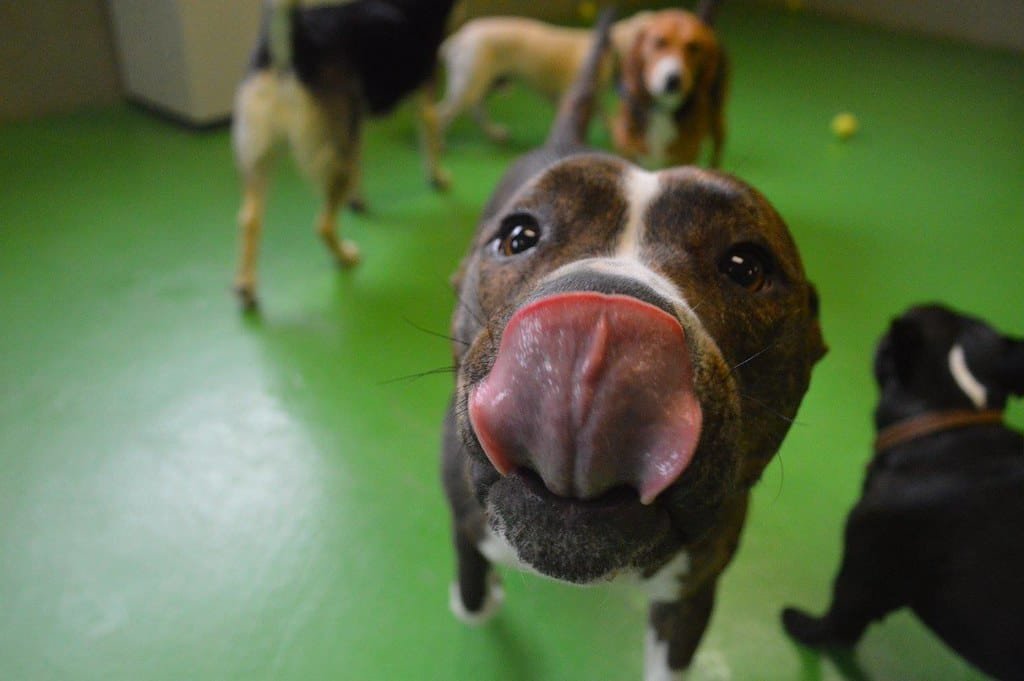
Image source: Flickr
4) The real clue is your dog’s body language
If you want to know whether your dog likes kisses, watch the dog — not your own intentions. Common signs of discomfort include:
- yawning when not tired
- looking away
- pulling away
- stiffening the body
- pinned-back or lowered ears
- tucked tail
- lip licking or tongue flicks
- whale eye, where you can see the white of the eye AKC Reader’s Digest Kinship
A relaxed dog, by contrast, usually looks loose, soft, and comfortable. If your dog leans in, stays relaxed, seeks contact, and doesn’t show avoidance or tension, they’re much more likely to be okay with the interaction. AKC Reader’s Digest
5) Face-to-face affection can feel threatening to some dogs
One reason kisses can be tricky is that putting your face directly next to a dog’s face can feel intrusive. Dogs often prefer more curved or side-on approaches rather than a direct face-first move into their personal space. Behavior experts cited by Daily Paws warn that some dogs may feel confused or threatened by this, especially if they don’t know the person well. Daily Paws
AKC also warns that close restraint plus a face near the dog’s mouth can increase bite risk if the dog becomes uncomfortable enough. This is especially important with children, who are often at face level and may miss subtle signs that a dog wants space. AKC
6) There are better ways to show affection if your dog isn’t into kisses
If your dog doesn’t love kisses, that doesn’t mean they don’t love you. It usually just means they prefer affection in more dog-friendly ways. Experts recommend things like gentle petting, ear scratches, play, walks, training games, treats, and shared activities your dog clearly enjoys. AKC Daily Paws Reader’s Digest
AKC also suggests redirecting excessive licking into healthier outlets like play, training, and enrichment tools such as lick mats. That can be a great option for dogs who enjoy licking but don’t necessarily enjoy face-to-face cuddling. AKC
Final verdict
Do dogs like kisses? Some do, many merely tolerate them, and some dislike them. The safest answer is this: don’t assume kisses are universally welcome just because your dog loves you. Let your dog’s body language tell you what they’re comfortable with, and choose the kind of affection they clearly enjoy. AKC Daily Paws Kinship
| Product | Why it fits this article | Price* | Rating* | |
|---|---|---|---|---|
| Purina Pro Plan Veterinary Supplements Calming Care | Helpful for dogs that get easily stressed during close handling or affection routines | $33.99 | 4.3/5 | View on Amazon |
| ChefAide 2 Pack Lick Mat for Dogs | Great for redirecting licking into calm enrichment instead of face licking | $5.99 | 4.4/5 | View on Amazon |
| Buddy Biscuits Trainers Training Bites | Useful for building positive associations with gentle handling and affection | $5.99 | 4.6/5 | View on Amazon |
| Zuke’s Mini Naturals Dog Training Treats | Small training rewards for consent-based affection training | — | 4.6/5 | View on Amazon |
*Prices and ratings were current at the time of research and may change.
Quick FAQ
Can dogs learn to like kisses?
Yes. Some dogs learn that kisses predict rewards, praise, or calm affection, so they become comfortable with them over time. Daily Paws Reader’s Digest
Why does my dog yawn when I kiss them?
Yawning can be a stress or appeasement signal, not just tiredness. It may be your dog’s polite way of saying they’re uncomfortable. AKC Daily Paws
If my dog licks me, does that mean they like kisses?
Not necessarily. Licking can mean affection, but it can also mean greeting, appeasement, attention-seeking, or stress. AKC Daily Paws
What’s a better way to show love?
Most experts favor dog-friendly affection like petting, play, walks, training, and shared activities over forcing hugs or kisses. AKC Reader’s Digest