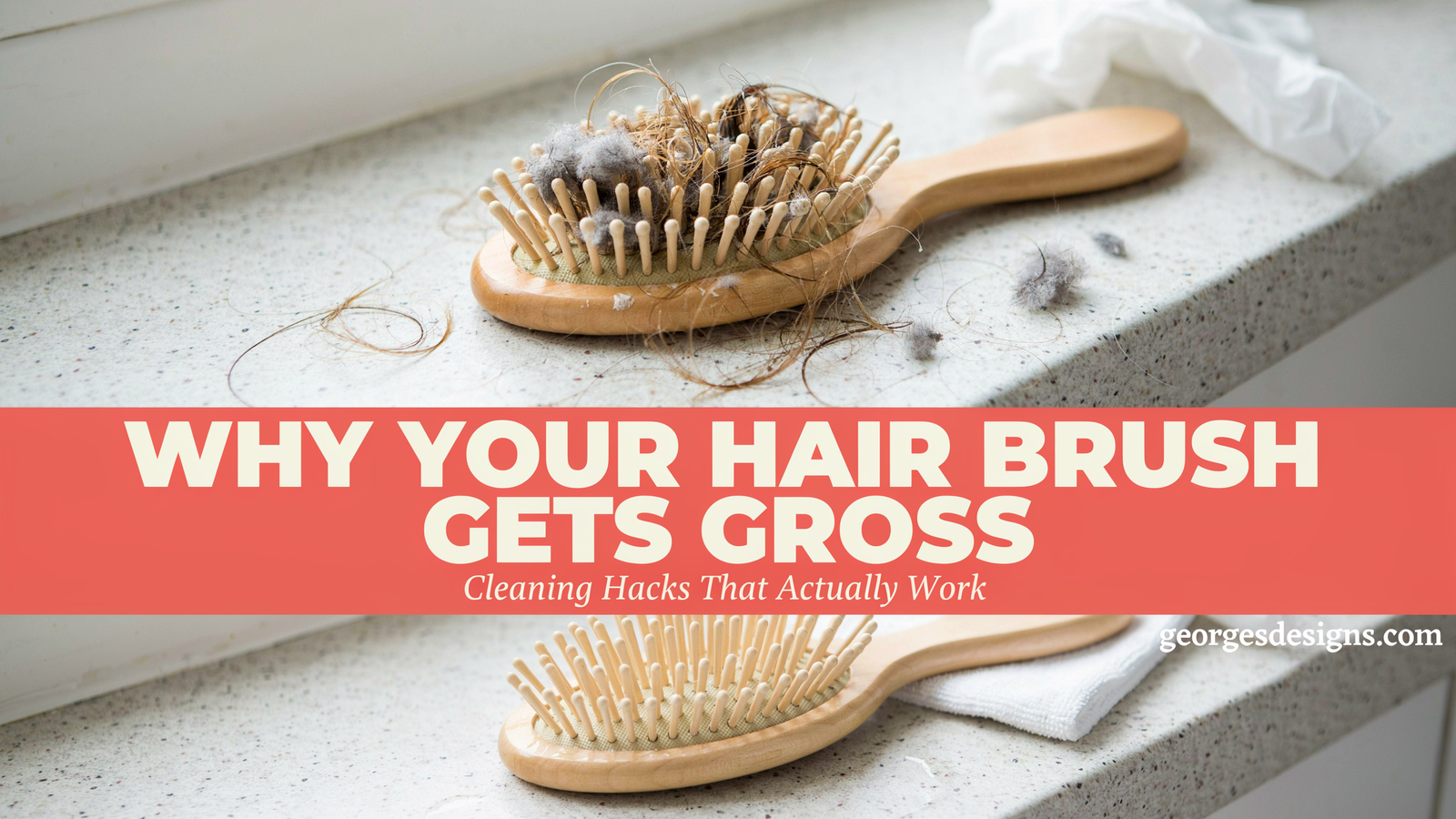
Hair brushes collect more than loose strands. Over time, they also trap scalp oils, styling product residue, dust, dead skin, and lint. If you keep using a dirty brush, you can end up transferring that buildup right back onto freshly washed hair. Experts generally recommend deep-cleaning hair brushes every 1–2 weeks, though oily hair, heavy product use, and shared brushes may require more frequent cleaning. NBC News Select Seventeen
Why cleaning your hair brush matters
A dirty brush can make hair look greasier, flatter, and less fresh because buildup from hairspray, dry shampoo, scalp oil, and dust gets redistributed through the hair. Dermatologist-backed advice also notes that unclean brushes may harbor germs and irritate the scalp over time. Seventeen Southern Living
Image source: Conair
How often should you clean hair brushes?
A good rule of thumb is to remove trapped hair weekly and deep-clean the brush every 1–2 weeks. If you have fine or oily hair, use lots of styling products, or brush daily, you may need to clean it every 3–4 days. Southern Living also suggests removing matted hair weekly and doing a deeper wash about once a month if buildup is light. NBC News Select Southern Living
What you need
You don’t need fancy supplies. Most brushes can be cleaned with:
- A rat-tail comb, brush rake, or fingers
- Warm water
- Clarifying shampoo, baby shampoo, or gentle soap
- An old toothbrush
- A clean towel
Experts cited by NBC News Select recommend warm water mixed with clarifying shampoo or dish soap to cut through oil and product residue. Seventeen also notes that gentle shampoo works well for soaking brushes. NBC News Select Seventeen
Step-by-step: how to clean hair brushes
1. Remove all the trapped hair
Start by pulling out as much hair as possible with your fingers. For stubborn buildup, use a rat-tail comb or brush-cleaning rake to lift hair and lint from the base of the bristles. This makes the washing step much more effective. NBC News Select Seventeen
2. Make a simple cleaning solution
Fill a bowl or sink with warm water and add a small amount of clarifying shampoo or gentle soap. This helps break down oil, dry shampoo, mousse, hairspray, and general grime. NBC News Select
3. Wash the brush
For plastic brushes, dip or soak the brush head in the solution and let it loosen buildup. Seventeen cites dermatologist advice suggesting a 20–30 minute soak in warm water with gentle soap or shampoo for many brush types. Seventeen
4. Scrub between the bristles
Use an old toothbrush to scrub around the base and between the bristles. This is the easiest way to remove gray fuzz, lint, and sticky residue left behind after soaking. NBC News Select
5. Rinse thoroughly
Rinse away all soap so you don’t transfer residue back onto your hair the next time you brush. NBC News Select
6. Let it air-dry completely
Place the brush bristle-side down on a towel and allow it to dry fully before using it again. Seventeen notes it’s best to leave brushes out overnight so moisture doesn’t linger inside the cushion or base. Seventeen
Image source: Clean My Space
How to clean different types of hair brushes
Plastic paddle brushes
These are usually the easiest to clean. Remove hair, soak briefly in warm soapy water, scrub, rinse, and dry. NBC News Select
Boar-bristle brushes
Be more gentle here. Experts advise dipping only the bristles rather than fully submerging the whole brush, since soaking can damage the cushion and construction. NBC News Select
Wooden brushes and combs
Avoid long soaks. Excess moisture can crack wood or weaken glued parts. Clean quickly, rinse lightly, and dry fast. NBC News Select
Round brushes
Round brushes can trap water inside the barrel or base, so keep them horizontal or bristle-side down while drying. NBC News Select
How to remove lint and gray fuzz from hair brushes
That fuzzy gray buildup is usually a mix of dust, dead skin, product residue, oils, and fabric fibers. The best way to remove it is to first loosen it with a brush-cleaning rake or comb, then scrub the base with an old toothbrush after soaking. If your brush still looks grimy, repeat the scrub once more instead of aggressively picking at the cushion. NBC News Select
Image source: One Good Thing by Jillee
Should you disinfect hair brushes?
If the brush is shared, used in a salon setting, or has been exposed to scalp issues, disinfecting can be smart. NBC News Select says plastic brushes can be sprayed with alcohol or soaked in diluted Barbicide after cleaning. Do this only if the brush material allows it, and always follow the product label instructions. NBC News Select
When should you replace a hair brush?
Even a well-cleaned brush won’t last forever. Replace it if bristles are bent, missing, sharp, fraying, or if the cushion is cracked or damaged. Seventeen notes that well-cared-for brushes can last for years, but once the structure starts breaking down, they can snag and damage hair. Southern Living recommends replacing hair brushes at least yearly if they’re heavily used. Seventeen Southern Living
*Prices and ratings are based on current Amazon search results and can change.
Our Top Picks for Cleaning Hair Brushes
Tested tools and products that make the job easier
* Prices and ratings reflect current Amazon listings and may change. As an Amazon Associate we earn a small commission from qualifying purchases at no extra cost to you.
Short product roundup copy you can add below the table
If you want to make hair brush cleaning faster, a brush-cleaning rake is the most useful tool to buy first. It removes tangled hair and lint far better than fingers alone. A clarifying shampoo is a smart second pick because it cuts through oils and styling residue without needing harsh cleaners. If you share brushes or clean tools professionally, a disinfectant concentrate can help sanitize non-porous tools after washing.
FAQ section
Can I soak every type of hair brush?
No. Plastic brushes are usually fine for a short soak, but wooden, cushioned, and boar-bristle brushes should be cleaned more carefully and not fully submerged. NBC News Select
What is the gray stuff in my hair brush?
It’s typically a mix of lint, dust, oils, dead skin, and product residue. NBC News Select Seventeen
Can a dirty brush make hair greasy?
Yes. Built-up oils and hair products can transfer back onto clean hair and make roots look flat or greasy faster. Southern Living Seventeen
How long should I let my brush dry?
Until it is completely dry — ideally overnight for many brushes. Seventeen
Conclusion
Cleaning your hair brush is one of those tiny maintenance habits that makes a surprisingly big difference. A quick weekly hair removal plus a deeper wash every couple of weeks can help your brush work better, keep buildup off your scalp, and make clean hair stay fresher longer. If your brush is full of lint, coated in product residue, or smells a little off, it’s probably time for a proper wash.