Disclosure: This post contains affiliate links. If you buy through them, we may earn a commission at no extra cost to you.
Image source: Berwyn Glass
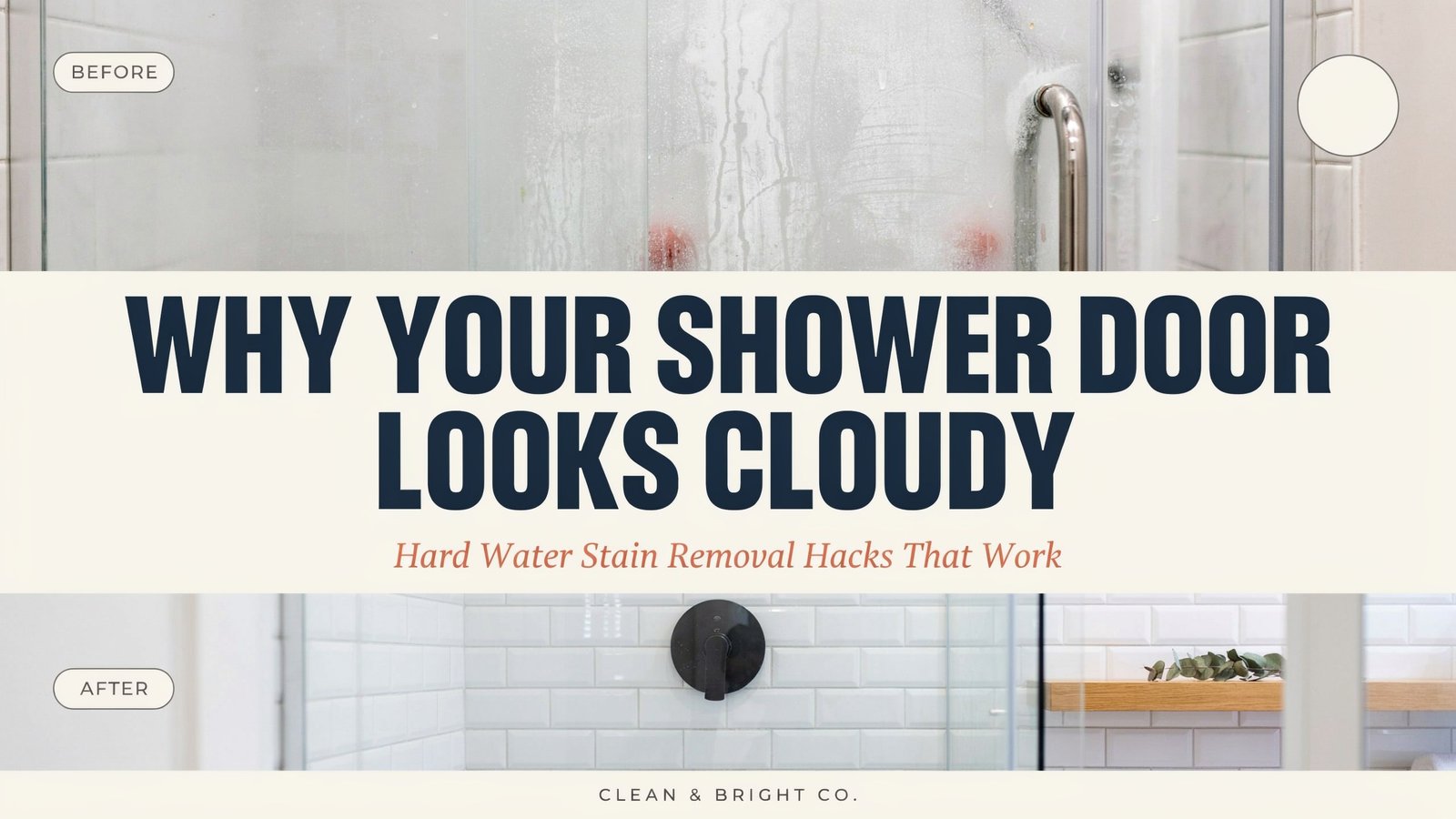
If your shower doors look cloudy no matter how often you wipe them, hard water is probably the reason. Those white, chalky marks are mineral deposits left behind when water evaporates. The good news is that you usually do not need anything extreme to fix it. For most glass shower doors, the best method is to start with a gentle vinegar-and-water treatment, let it dwell briefly, wipe with a microfiber cloth or other non-abrasive material, then rinse and dry thoroughly. If stains are severe, step up to a dedicated water-spot remover made for shower glass. That approach lines up with guidance from Merry Maids, Delta Shower Doors, and Kohler’s Sterling care guide. Source
Why hard water stains are so stubborn
Hard water stains are mostly mineral deposits, especially lime and calcium, that cling to glass over time. The longer they sit, the harder they are to remove. That is why shower doors often go from clear to hazy gradually instead of all at once. Kohler’s Sterling shower door care guide specifically warns about soap deposits and lime buildup in hard-water areas and recommends drying the door after each use to stop the cycle before it starts. Source
The best method, step by step
1) Start with the safest effective cleaner first
For most shower doors, begin with distilled white vinegar mixed with water. Merry Maids recommends using vinegar as an inexpensive natural option for hard water stains on shower doors, and suggests mixing 1/2 cup vinegar with 1/2 cup water, warming it, spraying it on, and letting it sit briefly before wiping. This is a good first-line method because it targets mineral residue without immediately jumping to harsher products. Source
2) Let the solution sit, but don’t overdo it
Once sprayed on the glass, let the vinegar solution sit for a few minutes so it can loosen the mineral deposits. Merry Maids recommends about 3 minutes for shower doors before wiping clean. That dwell time matters because hard water stains usually do not come off well with instant wiping alone. Source
3) Use microfiber or another non-abrasive material
This part matters just as much as the cleaner. Delta Shower Doors says to use only mild detergents or warm, soapy water for regular cleaning, and to use only a non-abrasive cloth or sponge. It also says not to use abrasive cleaners, bristly brushes, or rough sponges. Kohler’s Sterling guide similarly says never to use scouring powder, pads, or sharp instruments on glass panels. In other words, the best method is not just about what dissolves the stains — it is also about not scratching the glass while you remove them. Source
4) Rinse thoroughly and dry the glass completely
After wiping away the loosened deposits, rinse the shower door well and dry it. Delta recommends removing water from the glass after each use with a good-quality squeegee, then wiping dry with a clean, soft microfiber cloth. Sterling likewise recommends using a squeegee after each shower and wiping the door dry in hard-water areas. This final drying step is what keeps the same minerals from immediately drying back onto the glass. Source
5) Escalate only if stains are still there
If the haze or spotting remains after one or two rounds of vinegar cleaning, move to a commercial water spot remover made for shower glass. Merry Maids explicitly recommends either distilled white vinegar or a commercial water-spot remover for hard water stains on shower doors. This is the point where specialty products make sense: not as the first move, but as the second step when mineral buildup is older or thicker. Source
What not to use on shower doors
Image source: Berwyn Glass
A lot of people make shower glass worse by scrubbing too aggressively. Delta warns against abrasive cleaners, rough sponges, and bristly brushes, while Sterling says never to use scouring powders, pads, or sharp instruments on metalwork or glass panels. Delta also lists several chemicals to avoid because they can discolor parts and void the warranty, including acetone, lye, toluene, ethyl acetate, naphtha, and household hydrogen peroxide solution. If your shower door has a protective coating, harsh products are an even bigger mistake. Source
The single best prevention habit: squeegee after every shower
If you only do one thing to keep shower doors clear, make it this. Delta says that for best performance, you should use a quality squeegee after each use and wipe the door dry after showering, especially in hard-water areas or where soap deposits are noticeable. Kohler’s Sterling guide says essentially the same thing: use a squeegee after each shower and wipe the door dry with a soft cloth to avoid lime buildup. That is why the best method for removing hard water stains is really a two-part system: remove what is already there, then stop fresh minerals from drying on the glass again. Source
What to do with shower door tracks
Hard water and soap residue do not only collect on the glass. Shower door tracks can get grimy fast. Merry Maids recommends pouring vinegar into the tracks, letting it sit a few minutes, then scrubbing the tracks with a brush while avoiding contact with the glass, and wiping clean with paper towels. This is worth doing because a clean door next to filthy tracks still makes the whole shower look dirty. Source
What if vinegar doesn’t work?
If vinegar improves the door but does not fully restore clarity, that usually means the buildup has gone beyond light maintenance staining. At that point, use a product specifically sold as a hard water stain remover or shower glass cleaner, and always test a small inconspicuous area first. Delta explicitly recommends spot-testing any cleaning product before using it on the full door. Source
A simple routine that keeps shower doors clear longer
A practical routine looks like this:
- After every shower: squeegee the glass and wipe dry
- Weekly: wipe down the glass with a mild cleaner or vinegar solution
- Monthly: deep clean any remaining mineral haze and clean the tracks
- As needed: use a specialty hard water stain remover for stubborn deposits
That schedule reflects the basic maintenance logic shared by Delta, Sterling, and Merry Maids: mild regular cleaning, non-abrasive tools, and drying after each use. Source
Final verdict
For most homes, the best method for removing hard water stains from shower doors is this: spray on a warmed vinegar-and-water solution, let it sit for a few minutes, wipe with a microfiber cloth or non-abrasive sponge, rinse well, and finish by drying the glass completely. If that does not fully remove the stains, use a dedicated shower glass hard water remover. The real long-term fix, though, is prevention: squeegee and dry the doors after every shower so the minerals never get a chance to build up again. Source
| Product | Best For | Approx. Price | Rating | |
|---|---|---|---|---|
| Bio Clean Hard Water Stain Remover, 20.3 oz | Heavy hard water staining on shower glass | $19.99 | 4.3/5 | Shop on Amazon |
| Rain-X X-Treme Clean Shower Door Cleaner | Soap scum + hard water buildup on glass doors | $15.76 | 4.2/5 | Shop on Amazon |
| CLR Lime & Rust Remover Spray | Budget-friendly descaling and mineral stain removal | $4.97 | 4.5/5 | Shop on Amazon |
| Hiware All-Purpose Shower Squeegee, 10 Inch | Daily prevention after each shower | $9.99 | 4.7/5 | Shop on Amazon |
| Scotch-Brite Zero Scratch Scouring Pad, 3 Pack | Gentle scrubbing without harsh abrasives | $2.74 | 4.7/5 | Shop on Amazon |
Prices, ratings, and review counts can change. Verify before publishing.
Optional FAQ Section for SEO
What removes hard water stains from shower doors best?
For most shower doors, a distilled white vinegar and water solution is the best first method. For heavier buildup, a dedicated hard water stain remover usually works better. Source
Can vinegar damage shower doors?
Vinegar is commonly recommended for glass shower doors, but you should avoid using harsh or incompatible cleaners on coated or specialty surfaces and always test in a small hidden area first. Also, do not use vinegar on natural stone surfaces near the shower. Source
Should I use a scrub brush on shower glass?
Usually no. Delta says not to use bristly brushes or rough sponges, and Sterling says never to use scouring pads or sharp instruments on shower door glass. Source
How do I stop hard water stains from coming back?
Use a squeegee after every shower and wipe the glass dry with a soft microfiber cloth. That is the prevention step most consistently recommended by shower door manufacturers. Source